
Reposting with some addition from the Prairie Promoter.
For the most part, prairie vistas are things we imagine and project over fields and pastures or tell lies about with deceptive framing in our photography. The prairie world is tragically small in a literal sense. However, as bounded as our walks may be, the prairie is deep.
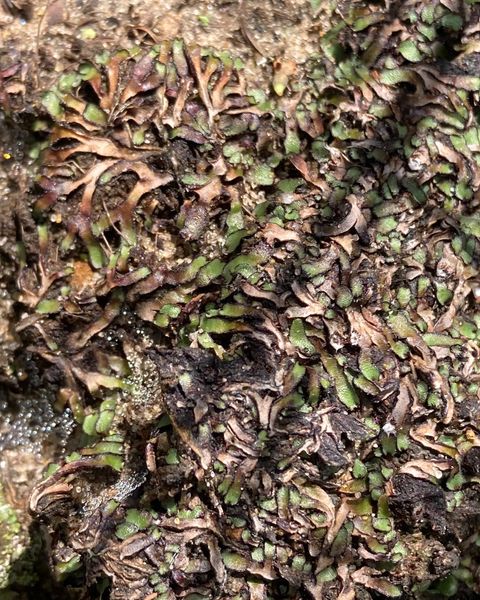
Lately I find myself sitting down among the chiggers and looking under and between blades and stalks. In that intersection where soil meets sun and wind there is in places a complex and textured surface called biological soil crust. Biological soil crust, also called cryptobiotic or cryptogamic soil crust (hereafter crusts), consists of a thin layer of living material formed at and very near the soil surface. This layer may consist of various combinations of cyanobacteria, terrestrial algae, lichens, and bryophytes (e.g., mosses, liverworts, and hornworts). I have seen them for decades on the prairie, but I have not thought much about them until recently. Crusts are most widely studied and appreciated in the context of arid ecosystems. In North America, almost all study of crusts has occurred in the arid west, though McCampbell and Maricle (2018)[1] studied crusts as far east as the Flint Hills of eastern Kansas. Their work, and that of Warren et al. (2021)[2] are both good sources for natural history and review. Many important processes are mediated by crusts, including nutrient cycling (nitrogen fixing organisms typically reside in crusts), energy flow (crusts fix carbon through photosynthesis), soil stability (for example, cyanobacteria exude polysaccharides that essentially glue soil particles together), water infiltration, and seed germination (facilitative or inhibitory depending on species involved). Crusts can also be components of habitat for other organisms. For example, they are a critical habitat element for the endangered Quino checkerspot butterfly in southern California. We know extremely little about the ecology of crusts on Midwestern prairies. Are they an important habitat element, particularly considering interactions with fire, for regal fritillaries? Various skippers?
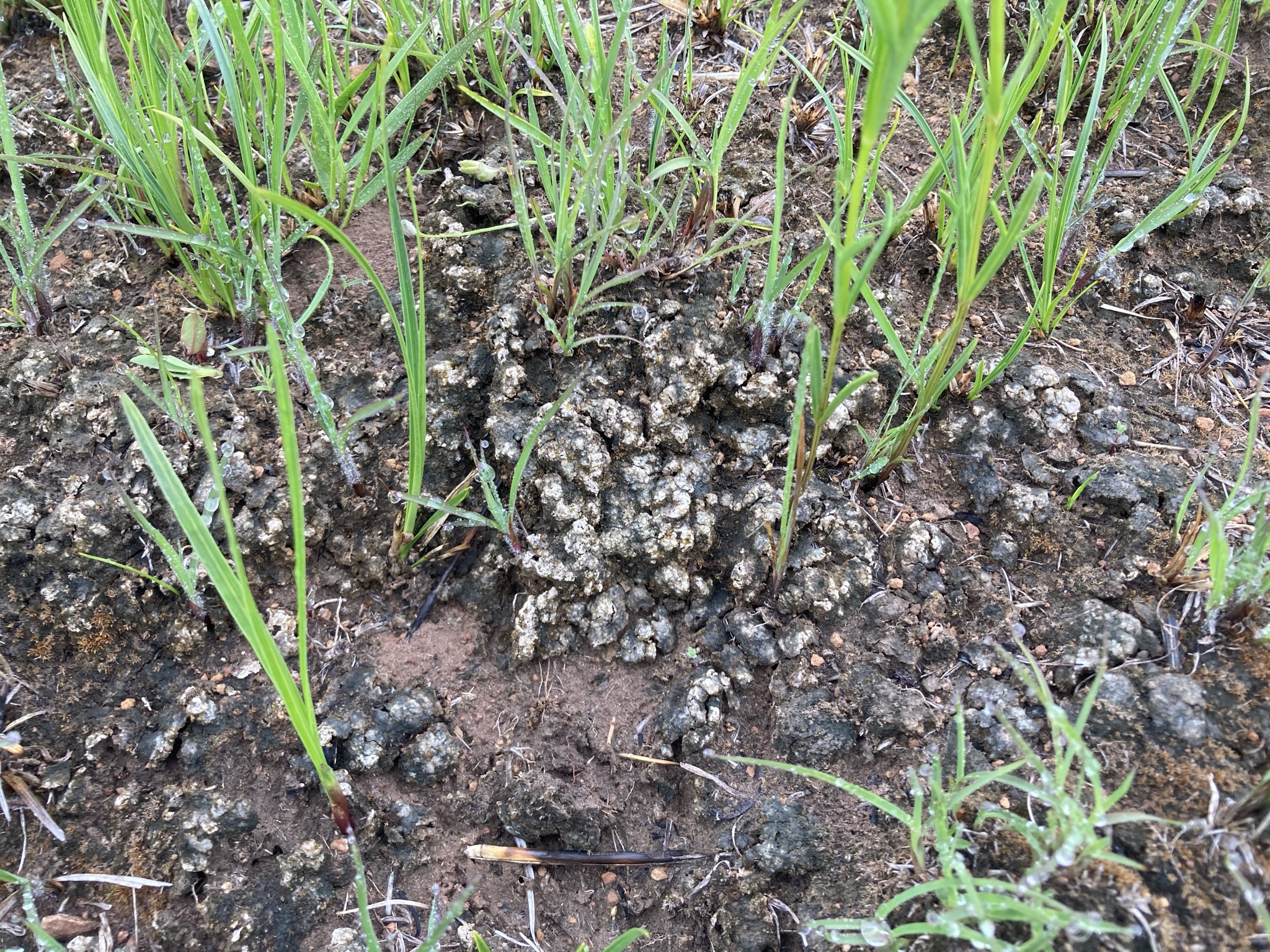
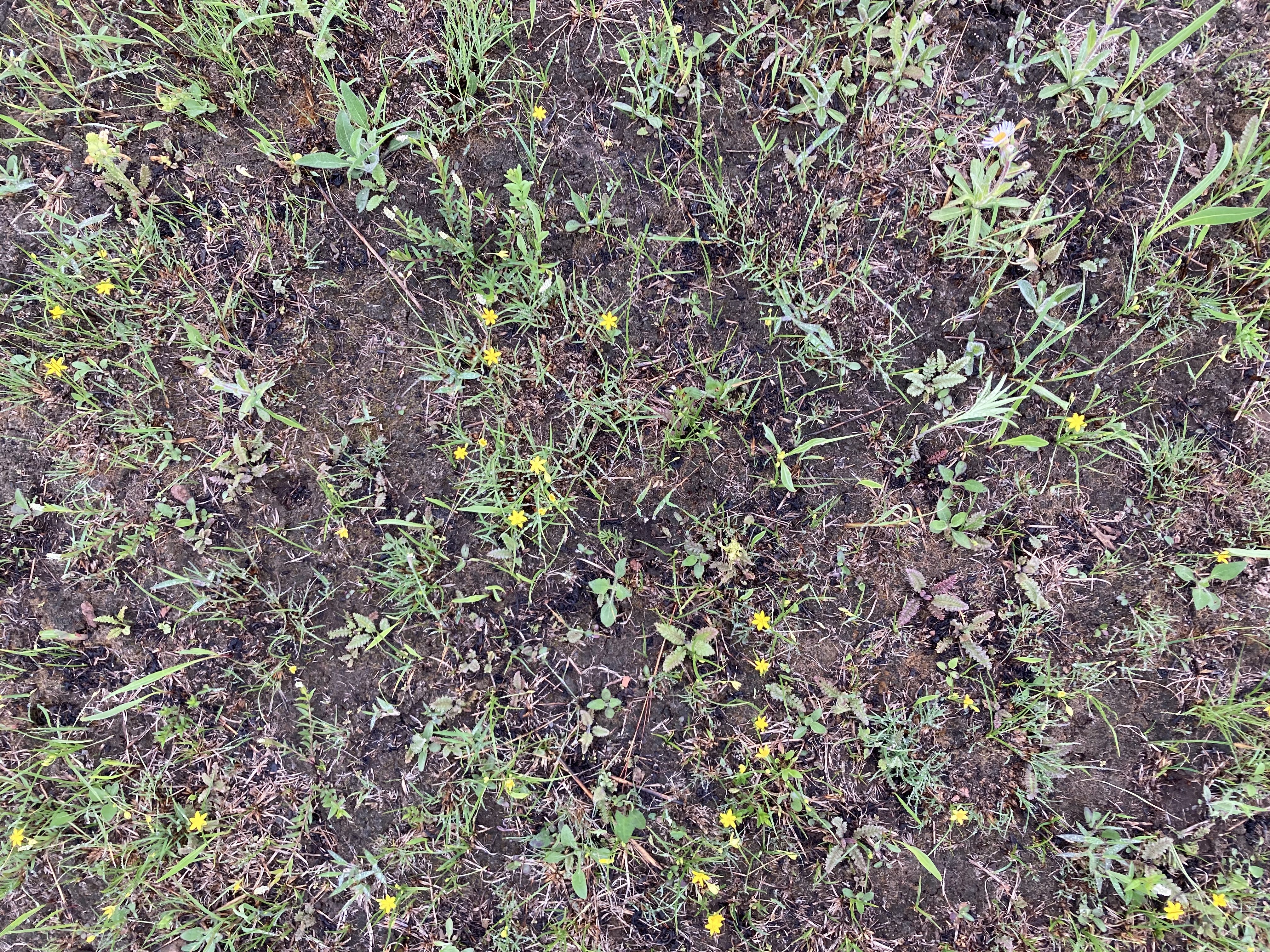
In relatively productive Midwestern ecosystems crusts are certainly more conspicuous where conditions are dry or nutrient poor and vegetation sparse—barrens and the very driest portions of dry sand and gravel prairies. In those settings, regardless of whether fire occurs frequently and regularly, large interstitial areas between vascular plants remain litter-free and exposed enough to support crusts. There, crusts may consist of luxuriant carpets of Cladonia lichens and mosses. Curtis (1959) [3] makes brief mention of lichens and a liverwort (Raboulia hemisphaerica) on dry prairies in Wisconsin. Ada Hayden (1918) [4] gives an account of the process of prairie degradation with pasturage going back to the 1880s. In her account she lists lichens among the prairie flora—downy gentian (Gentiana puberulenta), Hill’s thistle (Cirsium hillii), Junegrass (Koeleria macrantha), little bluestem (Schizachyrium scoparium), and others—being “supplanted” by Kentucky bluegrass (Poa pratensis) and other weeds on the hillslopes and ultimately persisting only on stony, dry hillcrests.
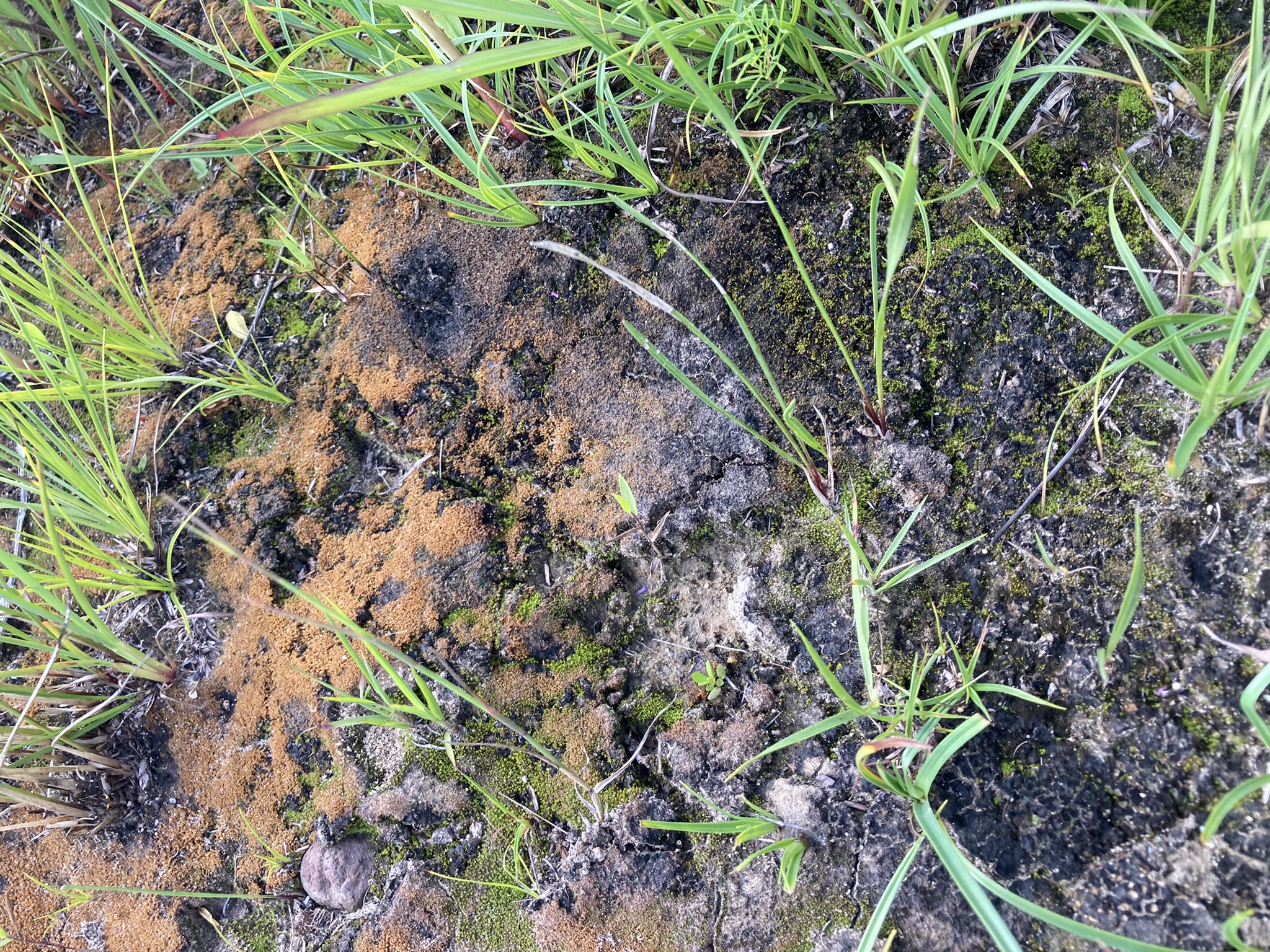
Today, crusts may be found in the all-too-rare cases dry, dry-mesic, and perhaps even mesic or wetter prairies that are burned frequently and regularly. Even oak woodlands support localized areas where mosses and lichens are prominent, especially where excessive leaf litter accumulation is prevented by the interaction of topography, trees, and wind. Crusts occur on planted prairies too. The first prairie planting I was involved with back in the 1990’s was on an aeolian sand deposit in central Iowa, and within a few years the general structure of the planting was discrete bunchgrasses with an intervening soil crust. In fact, crusts of varying complexity will form in a wide range of contexts where smothering litter/thatch are minimal and soil disturbance is minimal or at long interval—hay fields, abandoned quarries, trail edges, lightly used athletic fields—even along the driveway at our home. In the arid west, trampling from livestock and offroad vehicle use are major threats that physically break up and destroy crusts. The same is probably true here, but I suspect litter and thatch are also very important limiting factors.


So how much importance should we ascribe to crusts on sites we manage? I really have no idea! I do know that they are often present—or would develop with reduced thatch. Crusts are often present where minimal thatch also allows the spring vascular flora to thrive. There is little reason to believe crusts’ ecological roles would be dissimilar to those arid systems, but their relative importance certainly could differ. Perhaps some species are conservative to prairie crusts and others are weedy and indicative of inappropriate disturbance or fire exclusion just as some native vascular plants are. For a start, I encourage people to keep an eye out for crusts when out on the prairie or savanna. Below is a smattering of questions from my experience.

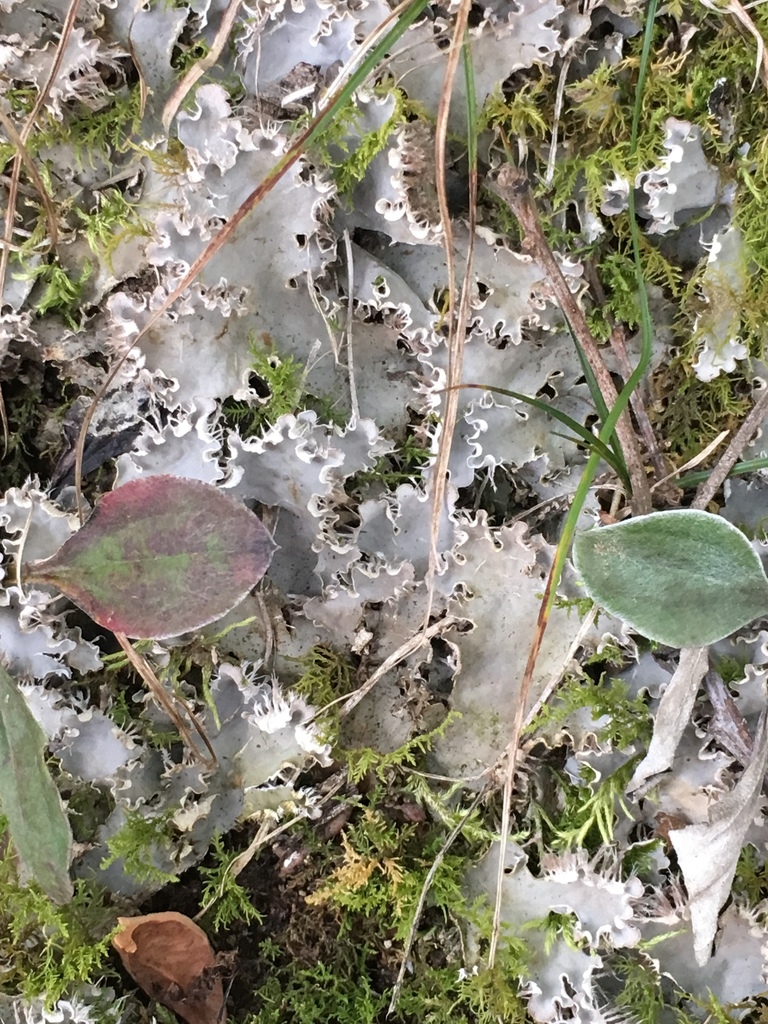
Very simply, what types of prairie support crusts, and what types of crusts do they support? This is complicated by how few exceptional sites there are that do not experience chronic excessive litter accumulation.
What is the relationship between fire frequency and seasonality and crust presence and composition? Anecdotally, frequent fire (or at least biomass removal without soil disturbance) is requisite for crusts at all but the driest or most nutrient-poor prairie sites, but crusts on burned sites seem to be relatively more comprised of cyanobacteria, terrestrial algae, and low mosses versus upright mosses and lichens.
How quickly do crusts recover from disturbance, and does this differ between relatively wet and arid climates?
Are the effects of fenced grazers on crusts in the Midwest similar to those documented in more arid climates? Putting other facets of that issue aside, remnant prairies are being grazed with fenced goats, cattle, and bison in the Midwest. This very likely affects crusts.
Are crusts associated with seedling recruitment of prairie- or savanna-associated vascular plants? Invasive species? Work elsewhere shows both inhibitive and facilitative interactions.
Is the physical structure created by crusts important for prairie invertebrates (e.g., overwintering, pupation, micro-refugia from fire, thermoregulation)?
Are crusts associated with increased or decreased nutrient availability?
Yes, just a few questions! I’m happy to have more to observe and wonder about. Even the imperiled and rare prairie is generous with such offerings to those who see it and visit.

[1] McCampbell, Brendon & Maricle, Brian. (2018). Natural History of Biological Soil Crusts in Prairie Ecosystems of the Great Plains: Organismal Composition and Photosynthetic Traits. Transactions of the Kansas Academy of Science. 121. 241-260.
[2] Warren, Steven D., Roger Rosentreter, & Nicole Pietrasiak. (2021). Biological soil crusts of the Great Plains: A review. Rangeland Ecology & Management. 78. 213-219.
[3] Curtis, John. (1959). The Vegetation of Wisconsin: An Ordination of Plant Communities. The University of Wisconsin Press.
[4] Hayden, Ada. (1918). Notes on the Floristic Features of a Prairie Province in Central Iowa. Proceedings of the Iowa Academy of Science. 25. 1-21.

 Prairie Botanist
You must be logged in to post a comment.