For most of us, home ownership carries with it the management of at least a small parcel of land, and usually this means maintaining a lawn. For the ambitious, this might also include perennial borders, shrubs, and trees. We all need outdoor space to recreate in. Our neighbors all have lawns. People seem to like them. Right?
I killed our bluegrass and fescue lawn. I have methodically replaced it over the last five springs, summers, and falls with species native to North America. Why? I’m an ecologist, and I see irreplaceable natural communities and ecosystems being degraded and destroyed every day and almost everywhere I go. Oftentimes, these types of environmental problems are large and intractable, and working against them is like screaming into the wind. One thing I can do is live my values at home. I also just like to be around plants and all of the organisms they attract. More than 500 North American plants are established on our half-acre lot.
I’ve also found that it’s just a very doable and practical course to take. Sure, it takes work to kill a lawn, prepare a site, and establish a native alternative. However, now that I am largely finished, I spend an hour or two on weekly maintenance during the growing season, which is less than my neighbors spend on their bluegrass and fescue lawns.
I also believe that the grass, border, and bed paradigm of landscaping is destructive. It strives to keep us in on the turf and away from nature and wonder. I don’t want to live that way. Do you?
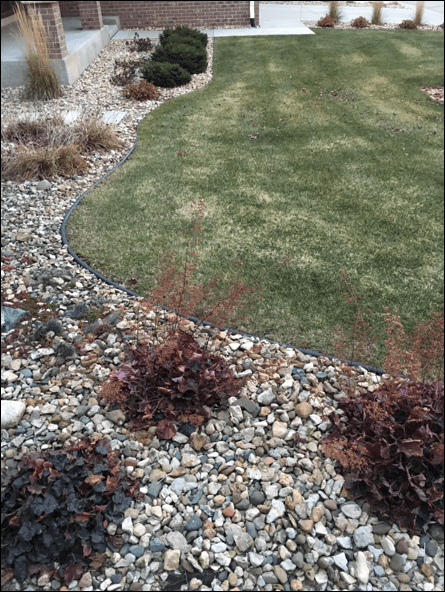
Typical lawn with a border and a bed of perennials and shrubs arranged as ornaments in a decorative mulch of gravel. How lame!
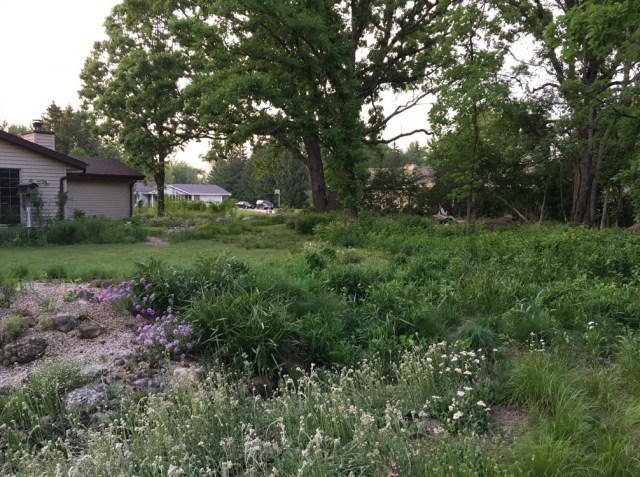
A view of part of the back yard. This includes a more intensively used turf area near the house, which consists of North American species like buffalograss, side-oats grama, poverty oat grass, several sedges, and several low-growing wildflowers. Working out from this, native vegetation is less intensively managed and taller. There is no border or edging. The point of this configuration is to draw people in among the surrounding native vegetation.
Also, using native alternatives in turf areas opens the door to adding a lot of diversity. There are more than forty North American species in my turf (the short, occasionally mowed area–not the surrounding taller stuff), which host specialist foliage feeding insects (e.g. moths and butterflies), provide pollinator resources, and provide my human mind with interest throughout the season.
Existing turf and Eurasian weeds can be killed by a number of means. They can be smothered with an opaque covering like cardboard over the course of several months. They can be dug out. They can be treated with a non-selective herbicide. I have utilized all of these means, but to the likely dismay of many, I prefer the latter. It is effective, practicable, minimizes soil disturbance and the potential for erosion, and it allows one to get native plants into the ground so they can do what they do almost immediately. There are potential risks in the occupational mixing and application of things like glyphosate, but judicious use that paves the way moving forward for a landscape with no need for herbicide, pesticide, and fertilizer is worth it. The soil is not poisoned, nor is the water. Once the turf is dead, any flushes of annual weeds can be easily removed with a flame weeder.
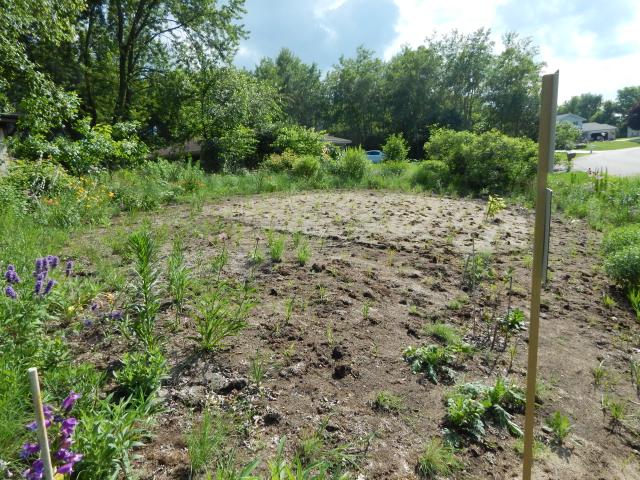
In the background is an area that was treated with glyphosate and has already been planted. In the foreground is an area where turf was dug out in my haste and desire to do work early in the spring before the lawn greened up and could be treated; this was more vulnerable to erosion until plants filled in.

This is the torch I use. It hooks up to a standard propane tank. It’s clunky, but it’s fun to use.
What you replace your exotic turfgrasses with depends on how you use your space. We only intensively use a small area of the back yard, so that is the only place where we maintain a lawn consisting of North American native species. Elsewhere, we have landscaped with native grasses, sedges, wildflowers, shrubs, and trees. Regardless of use, I have found one particular mode of establishment to be the most effective–using transplants. This way it is easy to weed. Seeding, while feasible in some instances, creates situations where weeding is more difficult, and weeding is essential for outcomes that are aesthetically pleasing and low maintenance. I do use seed from time to time, especially in cases of species for which transplants are not available, fresh seed germinates best, or that I establish among transplants after I feel reasonably certain that weed problems have been overcome.
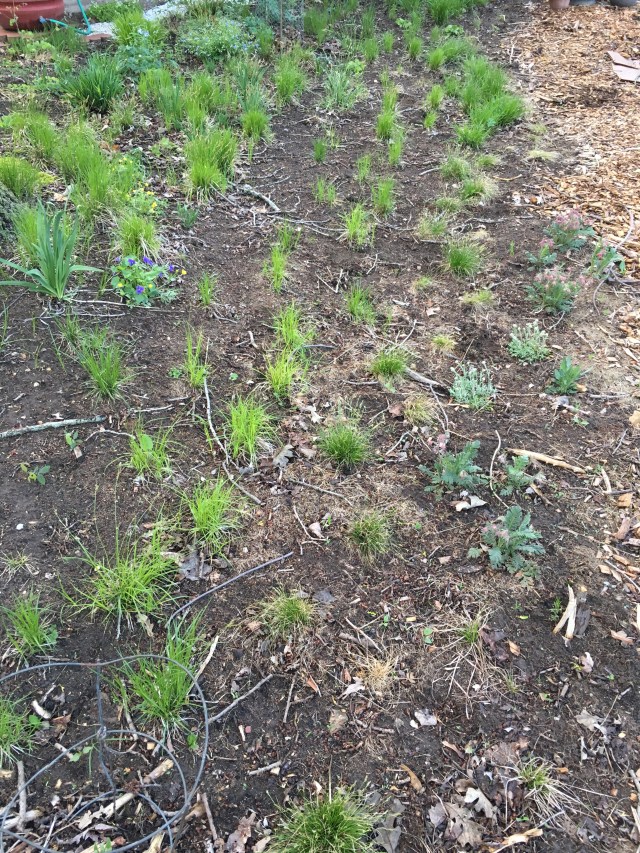
Divisions transplanted into an area where the turf was recently eliminated
More specifically, a low maintenance and a pleasing look can be achieved by the imitation of natural native plant communities, which often means creating a “matrix” or “living mulch” of bunch-grasses or sedges (and perhaps a few specific forbs for specialized situations) often by spacing transplants 12″-18″ apart and interspersing wildflowers of appropriate height between and among them. These then fill in within a few to several months, and once that happens, if you’ve weeded in the interim, you will have to do very little weeding in the future.
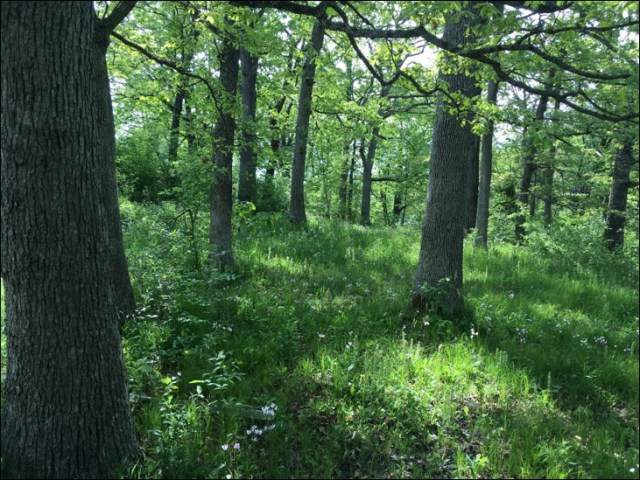
This remnant oak woodland and its rich groundlayer vegetation are among my inspirations.
Following are tons of examples of this from our home landscape with brief descriptions. I really have no conclusion here beyond offering these images and trusting that they, despite my lack of photography skill, are compelling.
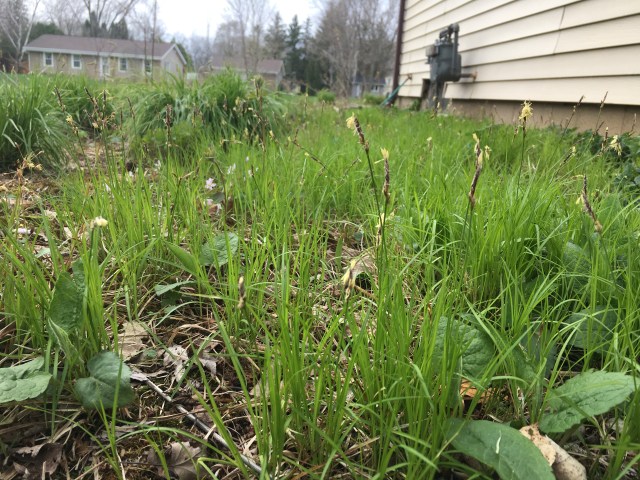
Here, Pennsylvania sedge (foreground) and Sprengel’s sedge (background) were established from transplants with spring beauty and forked aster. Things filled in within one growing season, and this is a very pleasant area to stroll through.
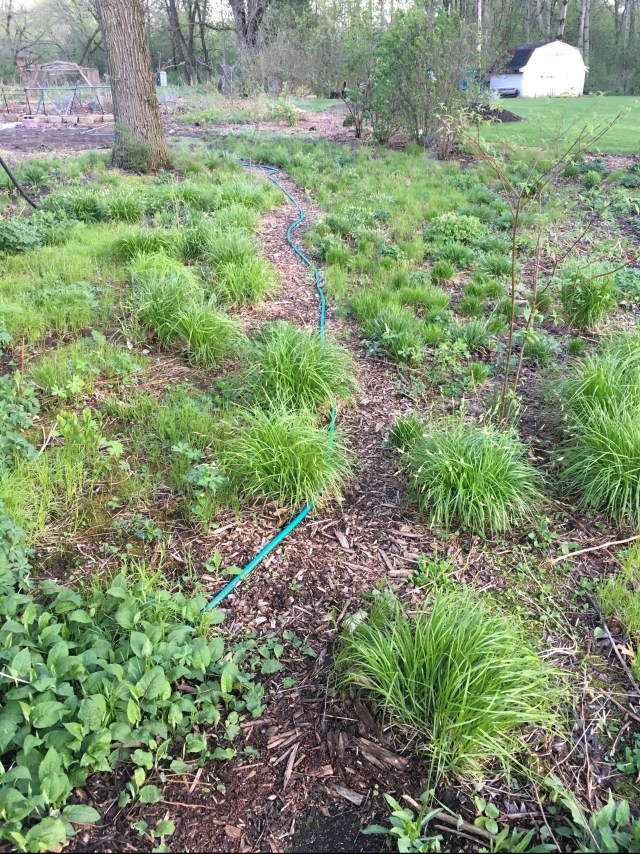
This is a different view of the same area in the previous picture. Other sedges than those already mentioned include James’ sedge and hairy wood sedge. Mulch is reserved for a meandering footpath, but the surroundings don’t prevent one from leaving that path.
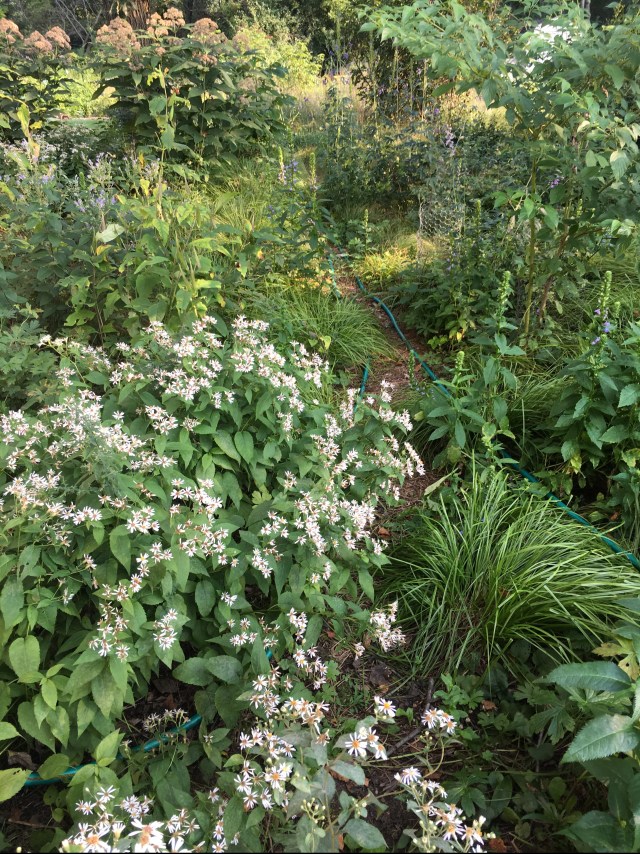
- As the season progresses, great blue lobelia, hoary skullcap, forked, aster, purple Joe Pye weed, and others become more prominent over the sedges.

This area along the sidewalk leading to the front door isn’t filled in with grasses and sedges, but native groundcovers including Robin’s plantain (which takes foot traffic), prairie smoke (which takes foot traffic when not in flower), and northern bedstraw. The lighter green groundcover around the birch tree is grove sandwort. The open shrubs in the upper left are false indigobush, which let’s through a lot of light and allows for underplanting. The shrubs in the upper right are low bush honeysuckle (Diervilla lonicera…not the invasive bush honeysuckles).

This is more or less the same area pictured immediately above, but a little later in the spring. Mountain blue-eyed grass and Robin’s plantain are in full bloom. Prairie smoke’s wispy seed heads are visible, kinnickinnic grows in the foreground. These plants are chosen to be showy, low, and unimposing near the front entryway to the house.
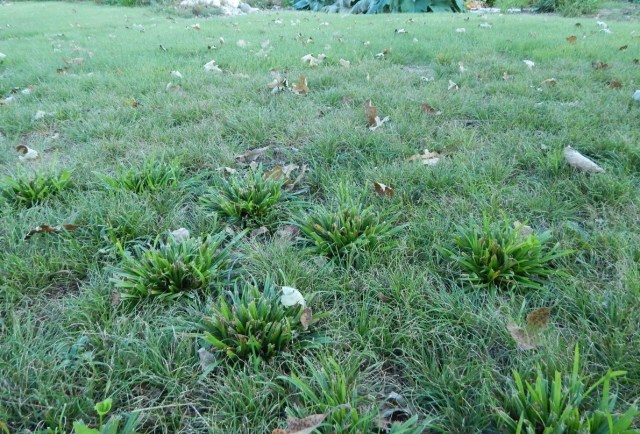
This is an area of high-use lawn in the back yard. The foreground falls mostly under the shade of a mature bur oak and was planted with wood sedge transplants and poverty oatgrass seeds (one for which seed is more practical for establishment). This transitions to buffalograss in the background where there is at least half a day of full sun.

This turf of buffalograss with small amounts of hairy grama, blue grama, and side-oats grama mixed in is growing in sunny portions of the high-use area of our back yard. It stands up to regular traffic, and as of now in our sandy loam soils, it has held up to Wisconsin weather through four growing seasons and winters.
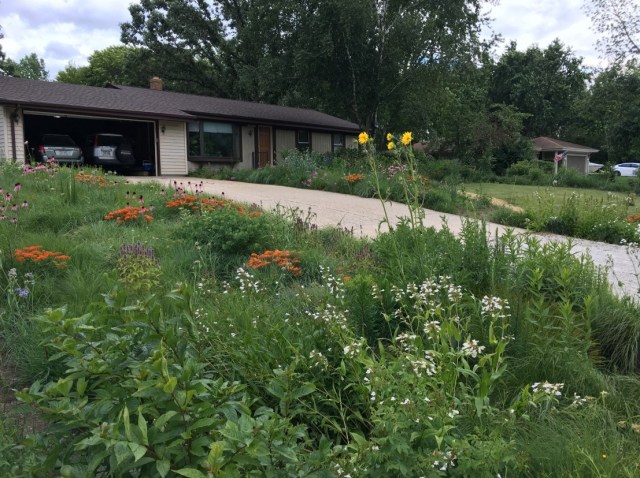
This was among my first plantings at this address. Here, prairie dropseed and little bluestem form a matrix into which butterfly milkweed, pale purple coneflower, and many other wildflowers have been planted. Towards the bottom is a somewhat more moist swale where sedges have been used to fill space and inter-planted with foxglove beardtongue, compass plant, marsh milkweed, and others. The shrub in the lower left is buttonbush. The lawn on the other side of the driveway is now all gone.

Early buttercup and common blue violet blooming around the margins of the high use area in the back yard. Early buttercup is among the first flowers to bloom for me, often beginning during the first week of April. Both violets and early buttercup establish best from fresh seed. These are mixed here with grasses like poverty oatgrass and sedges, which are more prominent as the season progresses.
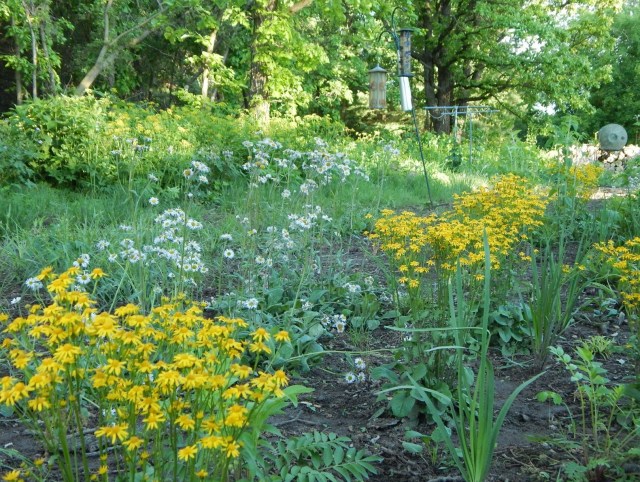
This area was planted with transplants during the previous fall and had not quite filled in as of the time of this photograph. Robin’s plantain and round-leaved ragwort (another that tolerates foot traffic) are the groundcovers that are in flower. Nodding onion and Jacob’s ladder are visible, but not in flower.
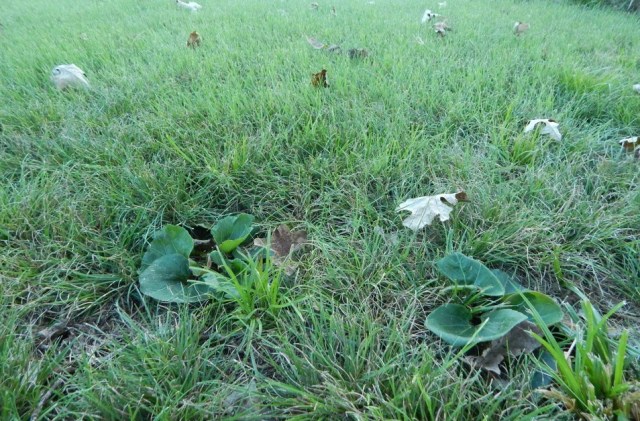
Kittentails (tolerate foot traffic), poverty oat grass, buffalograss, and common wood sedge co-mingling near the edge of the oak canopy
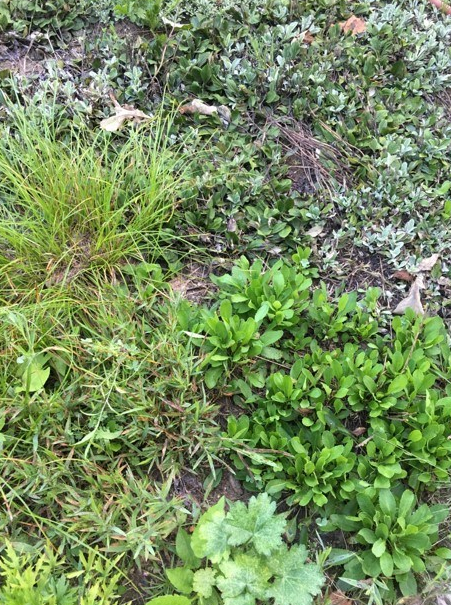
Foliage of cat’s foot, prairie ragwort, winecups, parasol sedge, prairie violet, and hairy panic grass in area occasionally walked on between a foot path and the compost bin.
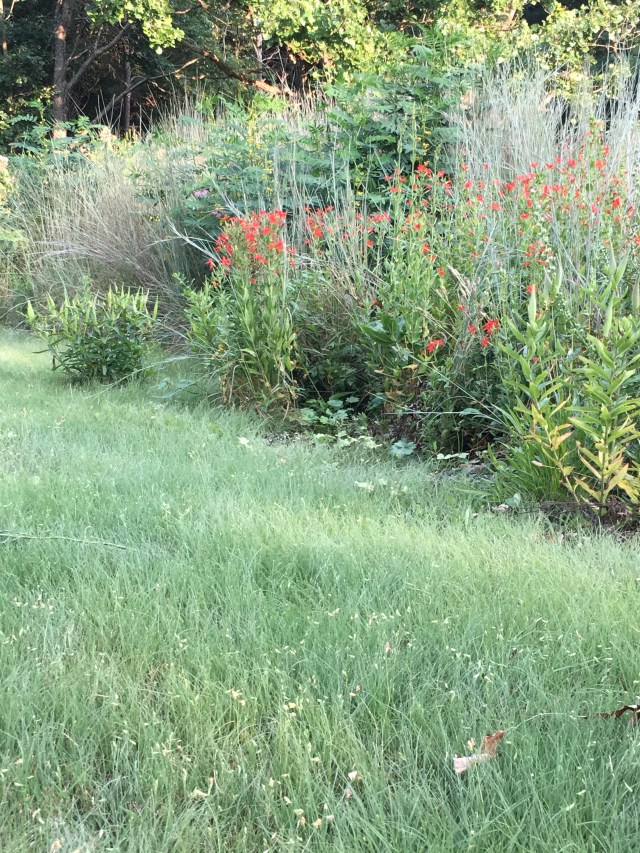
An August scene of buffalograss lawn with royal catchfly, little bluestem, butterfly milkweed, and Maryland senna in the background
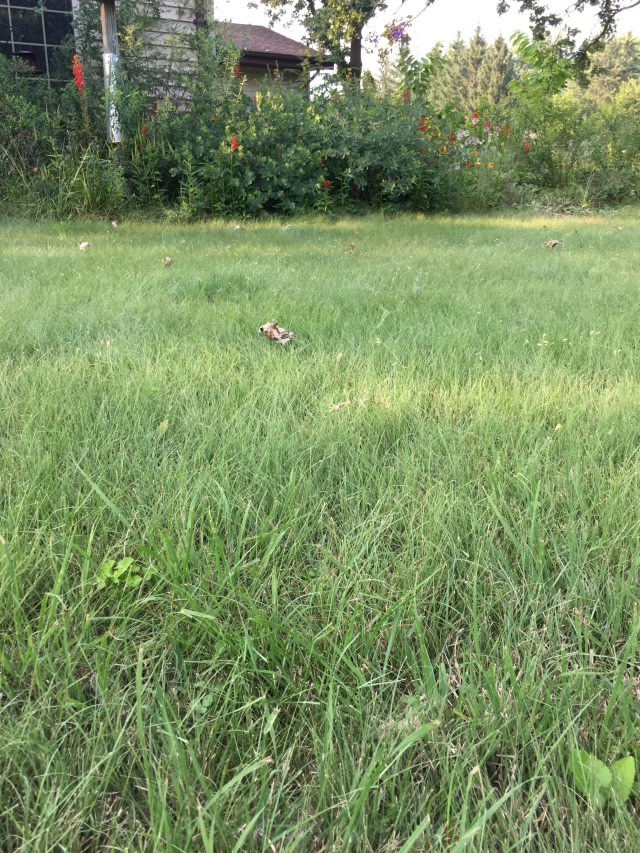
- More buffalograss, with a rogue white clover that I hope I didn’t miss
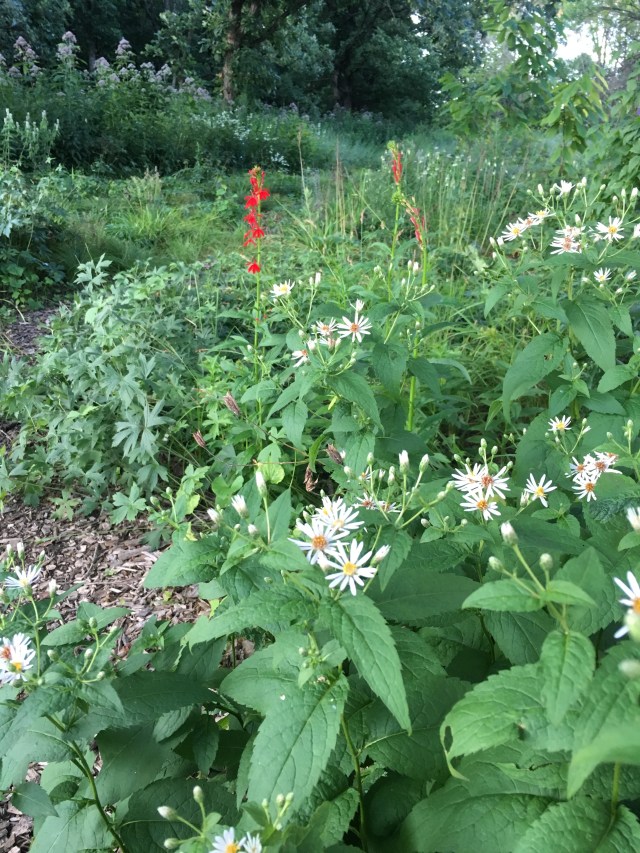
Cardinal flower and forked aster make a good combination in late summer along a mulched path. Purple Joe-pye weed and starry campion flower under the oaks in the background.

Prairie blazingstar, marsh milkweed, and slender mountain mint in the moist swale down by the road

Showy milkweed with fox sedge, prairie dock, and Kalm’s St. John’s wort in the moist swale down by the road
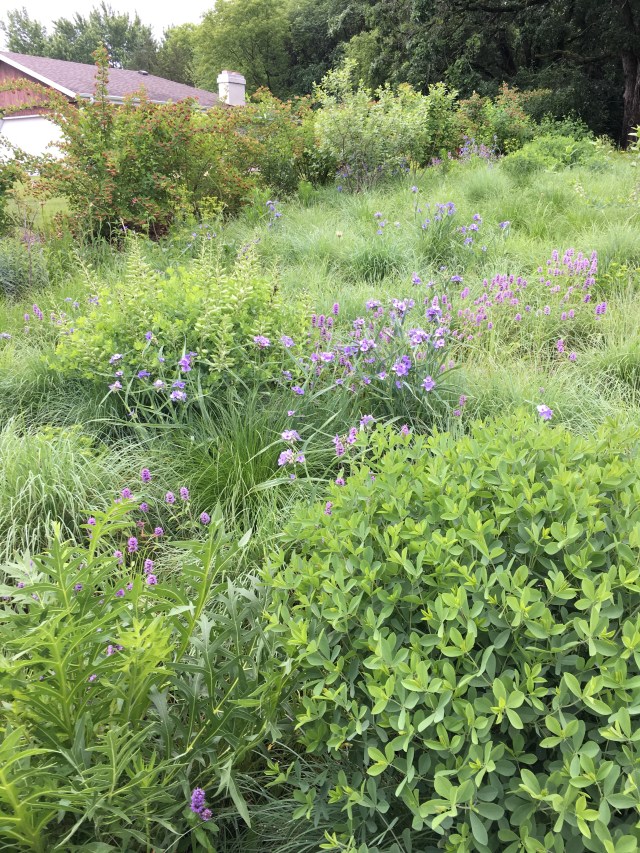
Ohio horsemint and Ohio spiderwort make for a purple early summer show on the front slope. The line of shrubs in the background consists mostly ninebark of and fragrant sumac.
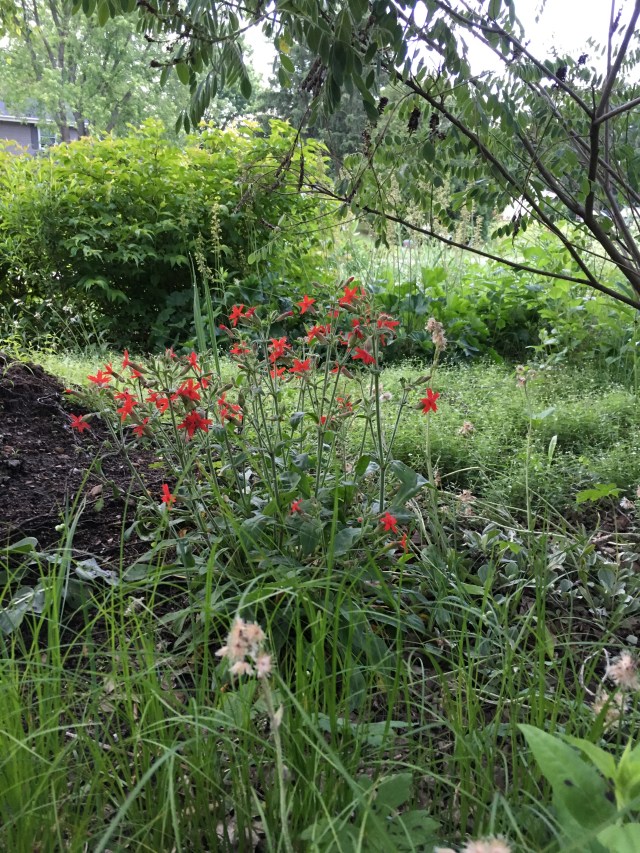
Royal catchfly, grove sandwort, cat’s foot, and some Pennsylvania sedge under a birch tree and false indigobush.
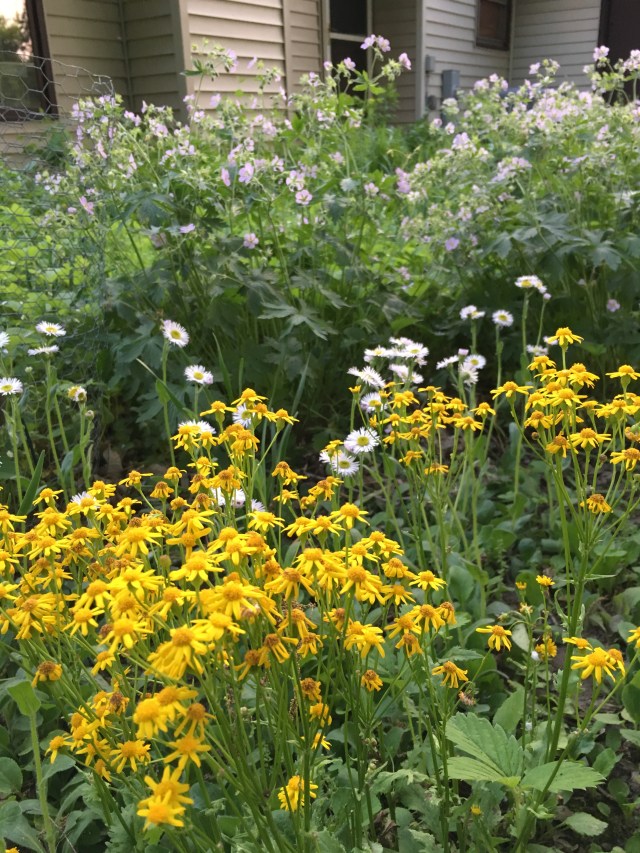
Round-leaved ragwort, Robin’s plantain, and wild geranium
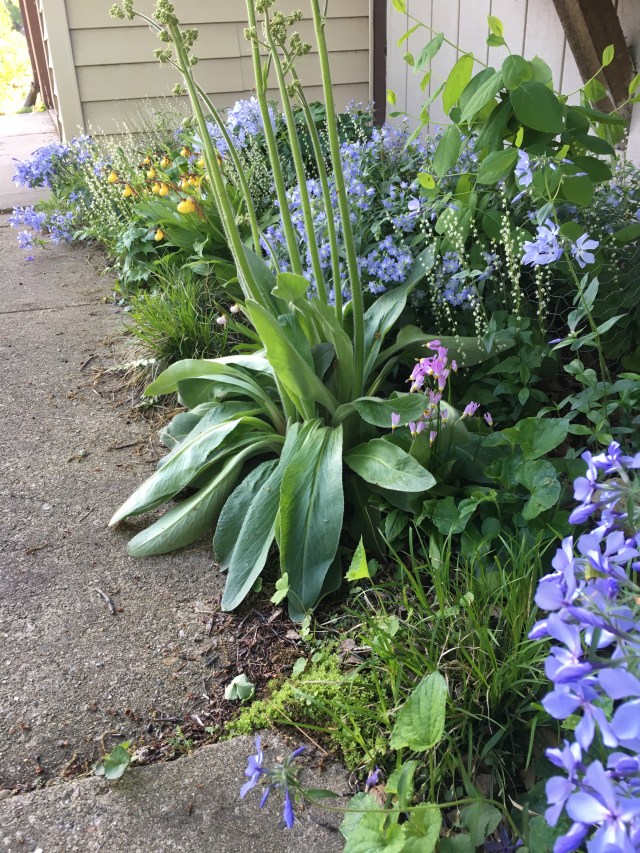
Woodland phox, Jacob’s ladder, bishop’s cap, amethyst shooting star, pedunculate sedge, swamp saxifrage, leatherwood, large yellow lady’s slipper orchid, little yellow lady’s slipper orchid, and some violets between the front sidewalk and the house (faces north-northwest). There was an overgrown yew hedge here when we moved in.

High spring in the side yard. There is a lot of wild geranium, common wood sedge, round-leaved ragwort, wild strawberry, and White Bear Lake sedge in this picture.

Woodland in the foreground transitioning to little bluestem and prairie dropseed on the slope down to the street

These wood betony seedlings are from seed given to me by Chris Mann. Wood betony is semi-parasitic and best sown into bare spots among established sedges or grasses.
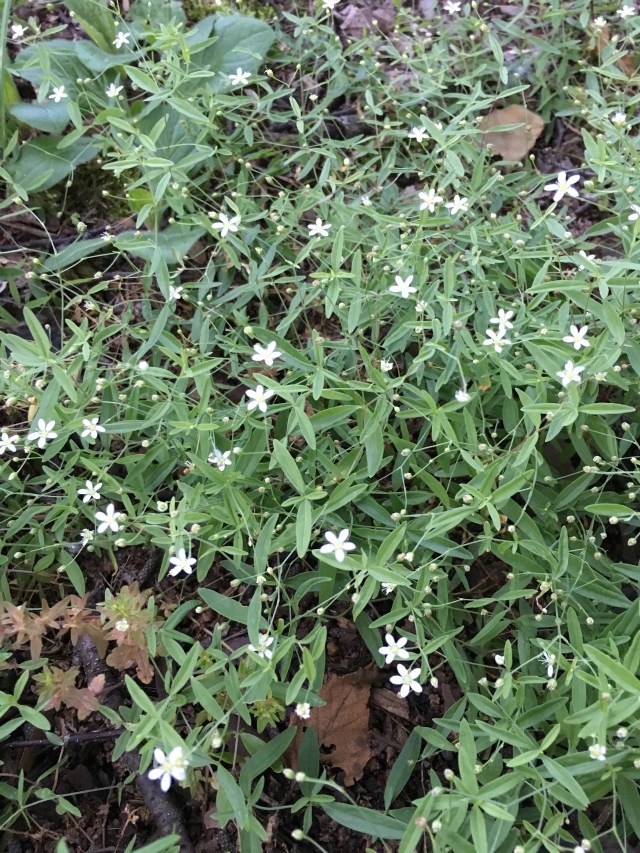
Grove sandwort is a great groundcover for dry, bright shade like that found under birch, aspen, or oak. It doesn’t take as much foot traffic as plants arising from rosettes, however.
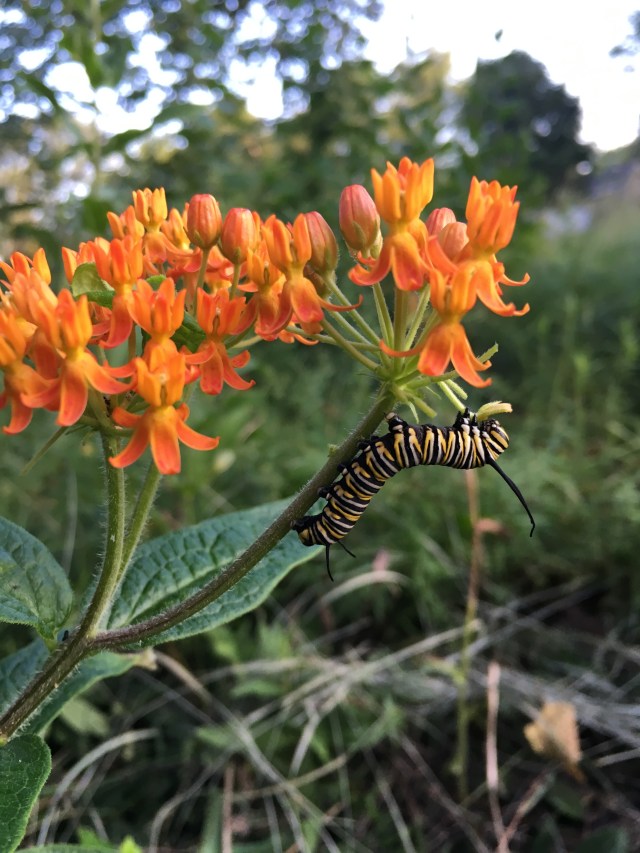
Obligatory monarch on milkweed
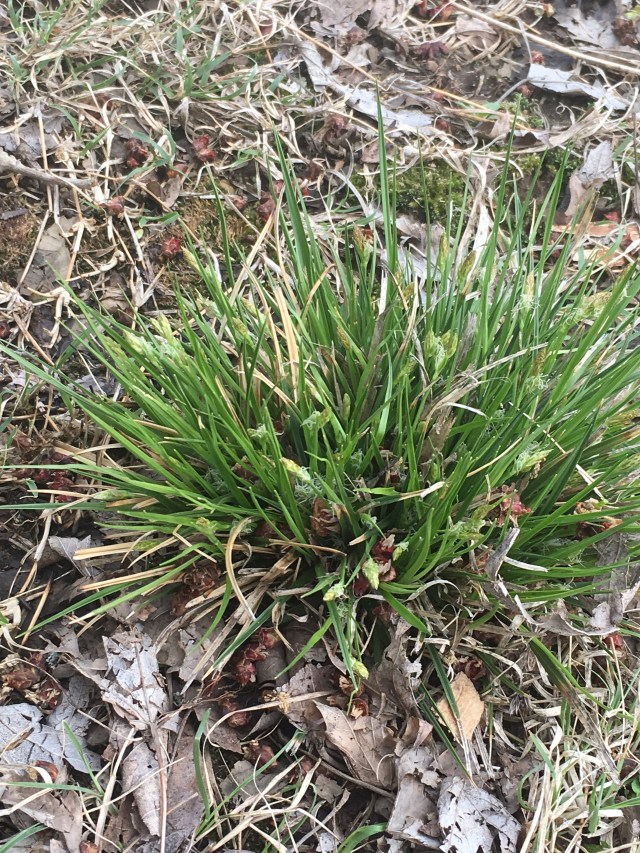
Showcasing parasol sedge growing with buffalograss
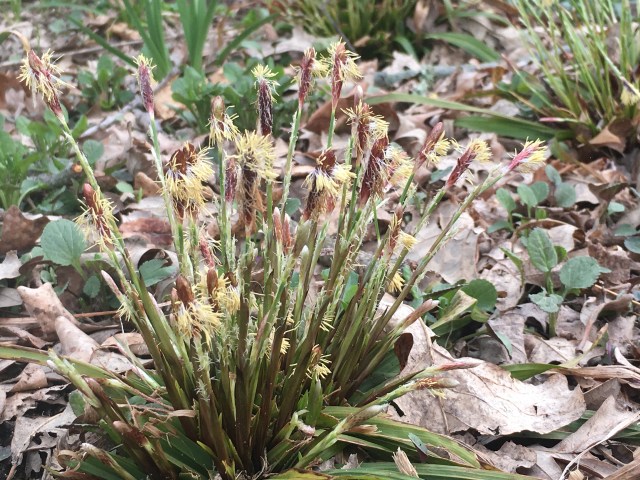
Showcasing plantain-leaved sedge in full flower

Showcasing pedunculate sedge in flower
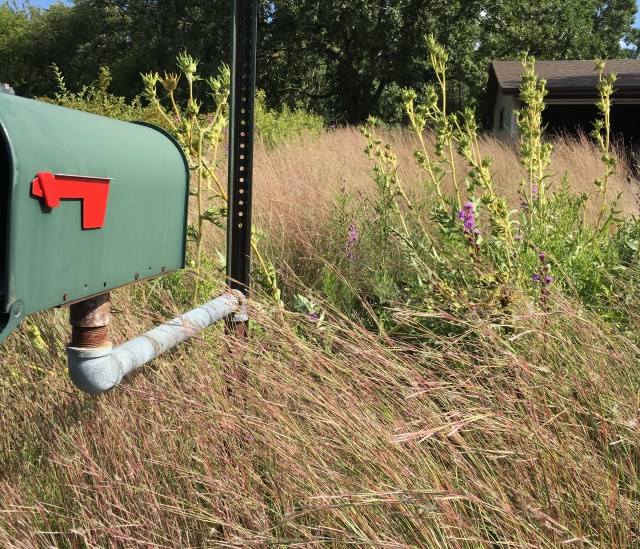
The year ends on a grassy note on the front slope. All seasons are different, and that is greatly appreciated by me as I pull over for the mail when I arrive home from work.

Meadow blazingstar with prairie dropseed, side-oats grama, and prairie blazingstar
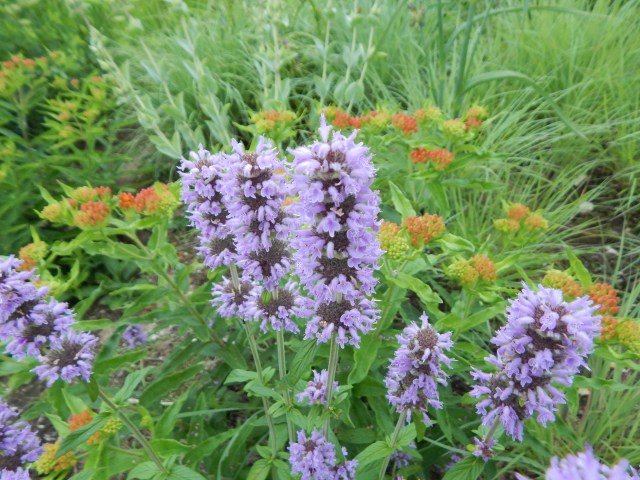
Ohio horsemint with butterfly milkweed, large-flowered beardtongue, prairie dropseed, and little bluestem

Purple milkweed with butterfly milkweed

Cat’s foot, a reliable host for American lady butterflies in an area that gets walked on a lot
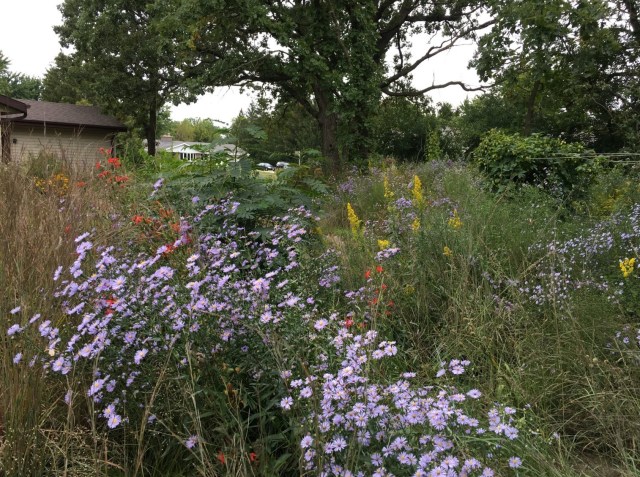
Asters, goldenrods, and royal catchfly with little bluestem and side-oats grama late in the summer
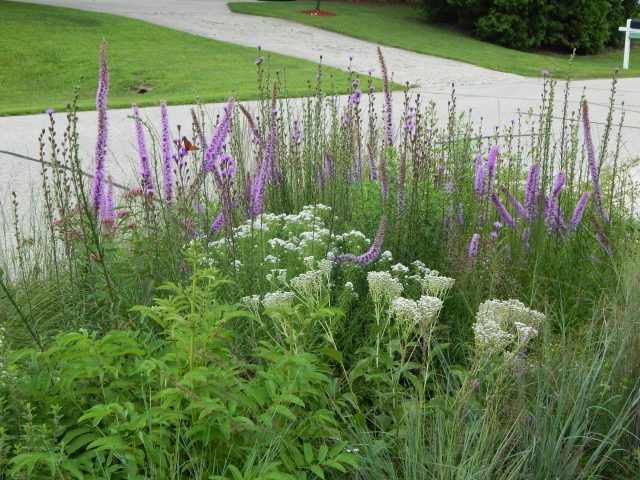
Prairie and meadow blazingstar, little bluestem, prairie dropseed, whild quinine, slender mountain mint, marsh milkweed and American burnett in the swale by the road. This area is swarmed by monarchs when the marsh blazingstar comes into full bloom.

Young planting with wild lupine, prairie dropseed, and large-flowered beardtongue
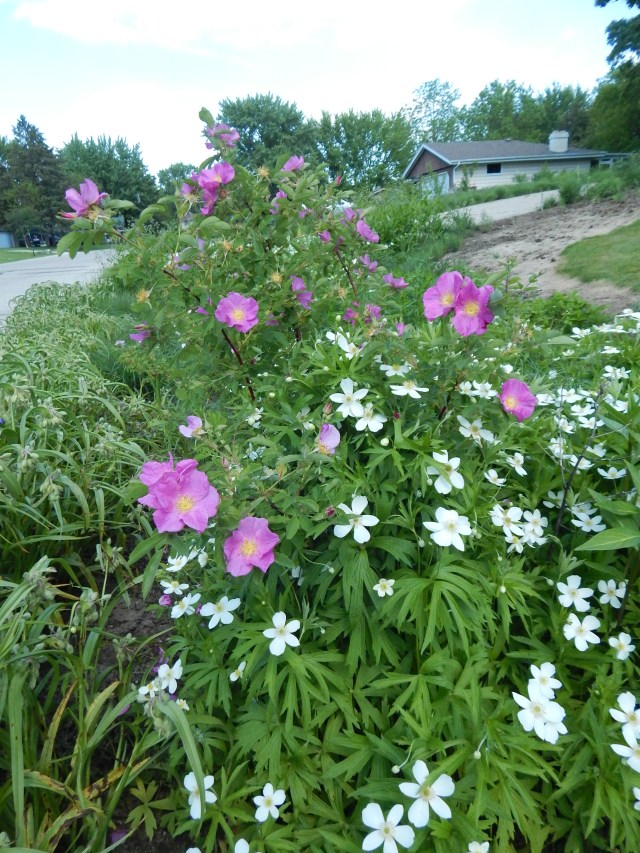
Smooth rose, Canada anemone, and bracted spiderwort are kept in check by other aggressive plants in the swale and are unable to aggressively spread uphill, because it is too dry and sandy on the slope.
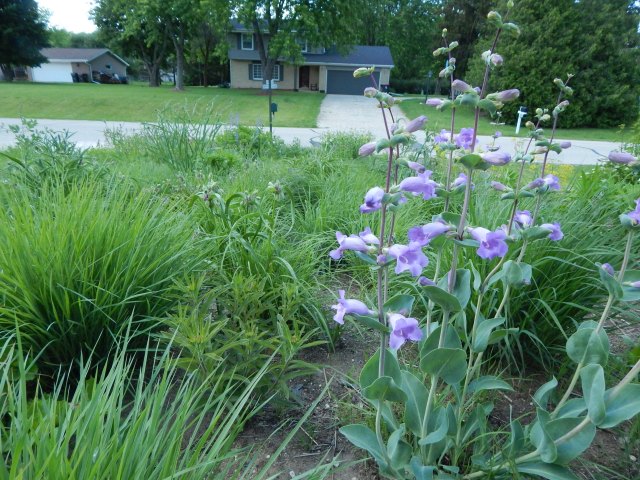
Large-flowered beardtongue
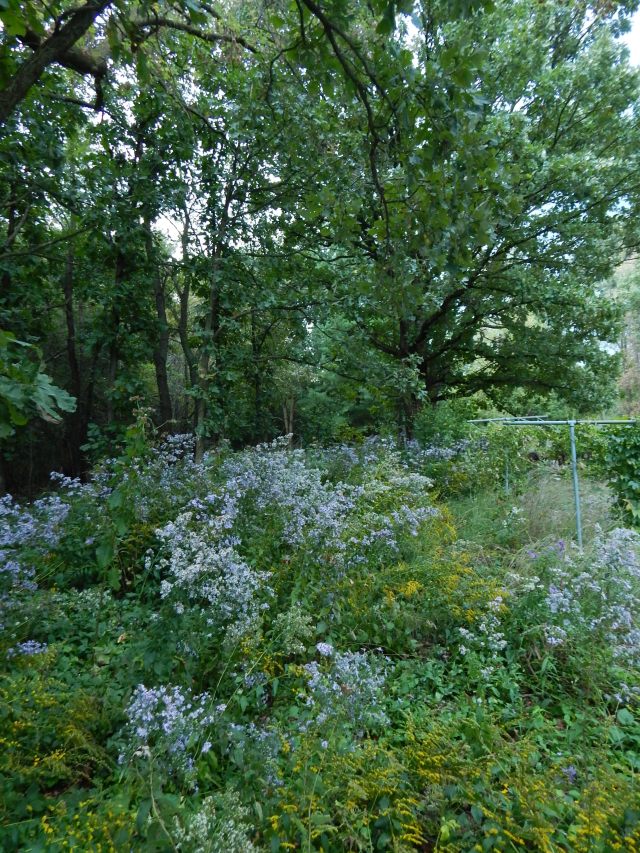
Here are more asters (especially Short’s, Drummond’s, arrow-leaved, smooth blue, and New England) and goldenrods (especially elm-leaved, zig-zag, and showy) under oak along the property line. What you can’t appreciate from the picture is the sound of bumble bees and other native bees, which is audible from about ten feet away.


 Prairie Botanist
You must be logged in to post a comment.