
In this study, adding forbs, especially adding early forbs, and adding transplants vs. seeds improved results. Three things are worth considering:
- Seeds were sown and transplants were added in May. Generally, the forbs sown in this study would have the best chance of establishing if seeded in autumn or fresh (wood betony).
- This was land coming out of corn-soy row-cropping on mollisol soils. It’s unlikely that silky aster (Symphyotrichum sericeum) and Pasqueflower (Pulsatilla patens), both species of dry, often rocky/gravelly prairies, were appropriate for the site. Forb treatments ranged from the addition of 1 to 6 species, so species choice was pretty important.
- Wood betony (Pedicularis canadensis) was an excellent choice, but using it is complicated by its hemi-parasitism and likely benefit of growing transplants with a host vs. not and the likelihood of seeded plants finding suitable hosts when sown onto bare ground at the outset of reconstruction of prairie on agricultural land vs. into a situation with established perennial hosts and minimal thatch.
I think seeding may have been relatively more successful with different timing and perhaps a different choice for a couple of the forbs. Certainly, seeding early species can be extremely successful. I’ve seen repeated instances of it, but good results require that the right species be included in sufficient amounts and that methods are chosen that recognize the ecologies/natural histories of the component species.
Here, smooth blue aster (Symphyotrichum laeve) or sky-blue aster (Symphyotrichum oolentangiense) would have been more appropriate asters than silky aster, and prairie violet (Viola pedatifida), yellow stargrass (Hypoxis hirsuta), or prairie blue-eyed grass (Sisyrinchium campestre) would have been more appropriate choices than Pasqueflower for mesic sites in northern IA / southern MN.
That said, many prairie plantings are sown in May, and often the many species in mixes aren’t the best for a particular site or their proportions reflect costs, especially with Farm Bill plantings. Most Farm Bill plantings could be much better …another topic.
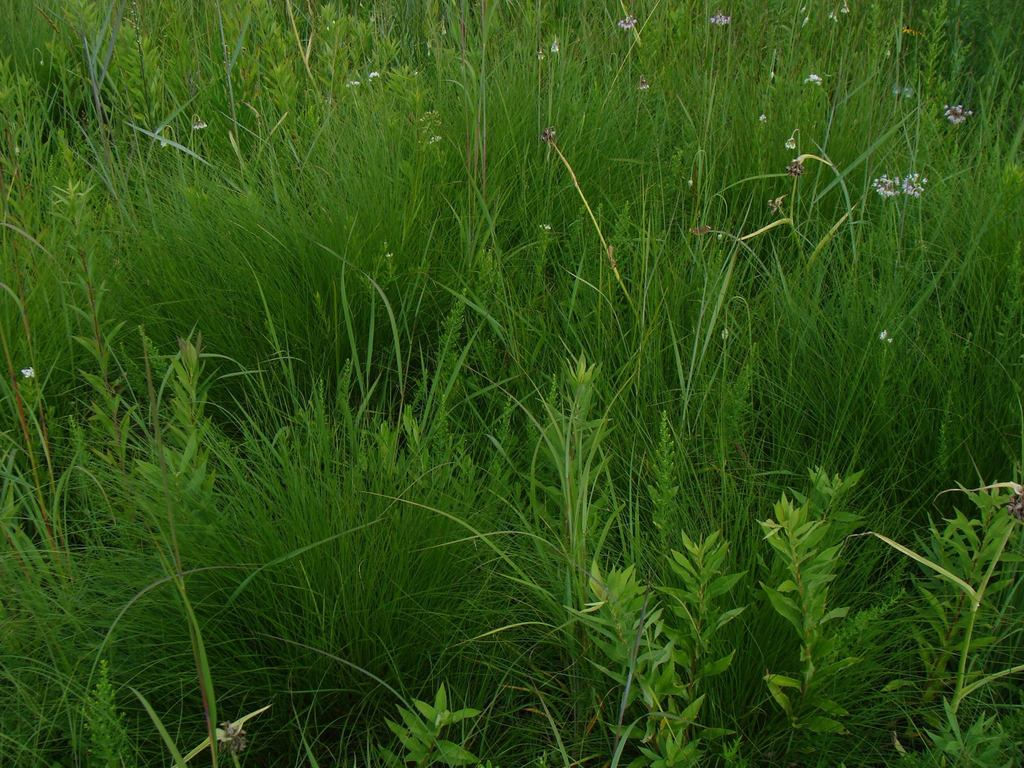
Here I commend the recognition that “early” species are important to include in prairie reconstruction. Also worth looking into are the actual co-dominant grasses of the upland mesic tallgrass prairie —porcupine grass (Hesperostipa spartea), prairie dropseed (Sporobolus heterolepis), and Leiberg’s panic-grass (Dichanthelium leibergii).

 Prairie Botanist
You must be logged in to post a comment.