Rough Thoughts on Restoration and Diversity from the Arid Grass and Sage

or1.jpg

Sage on my left and crested wheatgrass on my right on my way into the deep nowhere of high desert Oregon.

We live in a society that replaces craftsmanship and beauty with functionality. We don’t raise animals. We produce them by the tens of thousands inside walls, and then we thaw and heat them according to the instructions on the package. We don’t build cathedrals. We put churches in strip malls. Most red barns are sided with sheet metal. Most new houses are sided with vinyl. I think this cheapness has metastasized into our view of the natural world and ecological restoration as a practice. We should raise our standards, and consider beauty and complexity and what they add to human experience.

Restoration seeks to recover aspects of a natural system that have been lost through some form of disturbance, usually resulting from human activities. Ask a scientist to provide a rationale for ecological restoration. The response will likely touch on the carbon cycle, water quality, or perhaps the need to support a particular imperiled or commercially important species (usually fauna)—all functions. Technicians and graduate students can measure these things. In many cases, our health and our agricultural systems depend on them. Caring about functions is straightforward and defensible.

On a recent journey into the desert, I drove with the fault block Steens Mountain to my right, still capped with a bright mantle of snow. To my left were hills rising into the Sheepshead Mountains, gray with sagebrush and streaked with dark screes of basalt. For a stretch of miles, the road marks the contrast between relatively intact and altered landscapes. A burn scar extends from the road up the flanks of Steens Mountain. The scar contrasts against the gray surroundings, dominated by green new growth and gold dry stems of vigorous and exotic crested wheatgrass that the Bureau of Land Management seeded to restore range production after the fire. It reminded me of the plantings of warm season grasses that are often equated with restoration in the Midwest. The complexity of what follows destruction exceeds that of the denuded landscape, but falls far short of what was lost. We can measure some of this shortfall easily enough by counting species, and we do that all the time. The problem is that we fall into the trap of trying to justify the need for species in terms of function, declaring victory if greater diversity relates positively to the functioning of the system or if some species can serve some specific purpose. We soldier on, eyes down and walking briskly, when diversity is negatively related to function. It sometimes is!

I don’t give a damn. Species diversity has intrinsic value. It is something we can enjoy. It can occupy our senses and our minds and enrich our lives. Maybe it comes down to peoples’ philosophies about life, whether life is about achieving goals and meeting bottom lines, or whether life is more what we make of it—more what we experience. I tend towards the latter. I was driving into the desert to walk the buttes and see what was there to see, and I had existed through the preceding days directed towards the purpose of having a chance to explore. I read through dozens of vignettes about existence in a few hours of overland walking.

Perhaps many scientists’ and managers’ concepts of restoration are so simplistic, because that’s all we can hope for, given how thoroughly we exploit the land and foul the Earth. How could we possibly fix it? Maybe we can just weep for what we lose, or maybe some of us shelter ourselves by shutting ourselves away from an ailing friend in nature. I still think we should try for better. Restoration can’t just be about function. It has to consider our imaginations. It has to consider artists, wanderers, and wonderers. If that means in some cases people do or don’t get their reassuring biomass, whoop-de-doo for them, but we already have enough cheap crap as it is.

0r2.jpg

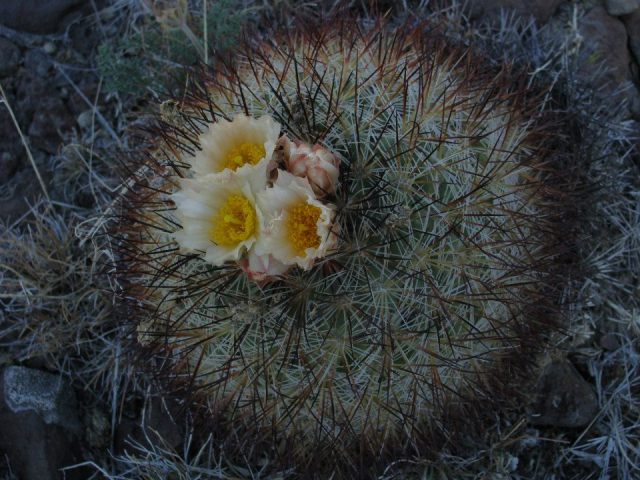
A great botanical find (Pediocactus nigrispinus), because there are only two documented sites for it in a county the size of Massachusetts. The flowers smell like limes. It’s restricted to parts of the high desert far enough away from livestock wells to avoid trampling.


Posted in native plants, restoration | Tagged , , , , , , | 1 Comment

References for Restoration and Conservation

My passion for the science of Ecology and the practices of ecological restoration and conservation arose largely from time I spent on small, “postage stamp”, Iowa prairies. I still struggle to articulate the appeal, but for me there is something of meaning in complexity.

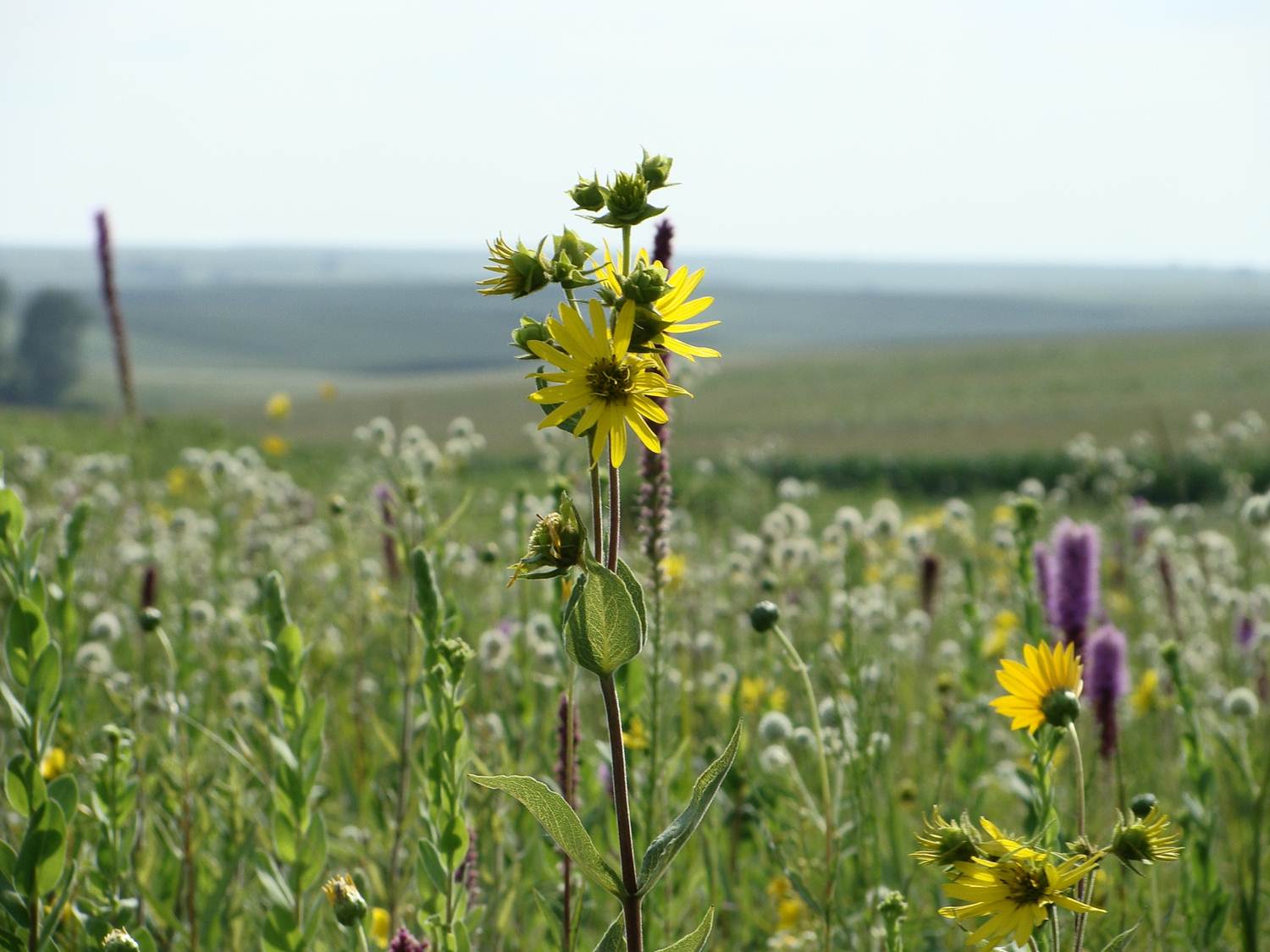
Owens prairie, an unbroken square of land on the five-figure per acre black soils of Iowa.

Owens prairie, an unbroken square of land on the five-figure per acre black soils of Iowa.

Having just defended a dissertation dedicated to restoration, I have been thinking about the remaining natural (or relatively natural) places many of us seek to conserve, and the degraded places we might wish to restore. I have been thinking about reference conditions, goals, and how much we really know about what we’re doing or would like to do.

We often use what remains as a reference for what we should conserve or restore. The prairie in the above picture is beautiful, a place where I would (and have) merrily strode about seeking to witness new and unfamiliar flora and fauna, but is this prairie like it used to be, and if it isn’t, should it be? Should our attempts to restore native vegetation nearby defer to the little square of land where this prairie clings to existence and its attendant environmental and landscape configuration? Unlike the prairies Willa Cather knew, so much of what we have left, regardless of how many open blossoms scream richness and beauty, is changed. It is changed by the deposition of nitrogen from surrounding fields and feed lots, the loss of native herbivores, the loss of the effects of predators on herbivore behavior, altered fire regimes, the population effects of isolation, increased atmospheric carbon dioxide, and on and on. Unfortunately, only rarely can we approach an understanding of how much things have changed. Are there more showy forbs than there should be (says a Kansan), or are there fewer (says an Iowan)? Some might argue to use more western prairies for reference, because they have been consistently grazed and more often burned, but others might argue that Iowa prairies have not been sprayed with broad-leaf herbicides at large scales or that European burning and grazing regimes are every bit as foreign as their omission. Not only have so many things changed, but conditions are changing, and they will change.

So we might look to the past for a reference. We might look to what we have now, even if it has changed, because it represents the evolution (in more than one sense of the word) of the historic system in response to change. We might take this further and consider how such change might be limited by isolation and the pace at which change occurs.

I tend to come down thinking about the future. I found myself defending species richness this last Monday, and the future is the primary reason why. In Iowa, there are still prairies. The species in the photograph above are attractive, and maybe change has inflated their richness at small scales, but what would be growing on Owens Prairie had those species not been there when the surrounding sod was turned over and the prairie was isolated? Would native plant species dominate and some of their rarer consumers (regal fritillaries can be found on this prairie) find adequate resources, or would this square of land more resemble the surrounding corn fields in terms of its complexity?

Richness originally called to me in a human way. It appeals to my sense of beauty and need to live in a textured world. I value sharing the story of a flower or bird with another person, and for someone like me, it forms the nucleus of human interaction.

But when it comes to the science, I’m with Loreau. As a species, we are full tilt ahead on a dark and winding course. Richness is our insurance.
Posted in native plants, restoration, Weather and Climate | Tagged , , , , , , , | Leave a comment

Flowering Time and Temperature Variation

I have been at this for some time with Ben VanderWeide, and hopefully we are nearing publication. The focus of most work to date that studies how variation in temperature affects when things flower has focused on species that flower early. I think people focus on these species, in part, because their early flowering is conspicuous. We are all looking for blossoms in spring. These species also clearly respond to temperature around and immediately before they flower. The prevailing view is that later flowering species are less sensitive to warming. This, however, is not borne out by data from 261 species in the northern Flint Hills of Kansas dating back to 1893.

Instead, regardless of when they flower on average, species respond to spring warmth by advancing flowering. Late species, however (and other studies have shown this too) delay flowering in response to warmth during other times of the year, particularly later in summer. The result of this is that later species are actually more sensitive to warming, if one sums sensitivity to warming (slope estimates of regressions of mean first flowering date (FFD) against monthly mean temperatures) across months during the year leading up to flowering. The figure below shows this nicely. Cumulative sensitivity (the sum of absolute values of positive and negative sensitivities) is greater, in general, for species flower later in the year (panel A), and this seems to be because they have greater delays (panel C), while there is not much relationship between mean FFD and phenological advancement (panel B). We used quantile regression, because of heteroscedasticity (more variation for later flowering species), but in panels A and C all positive slopes are significant.

quantilereg3

Posted in native plants, Phenology, Weather and Climate | Tagged , , , , , , , | Leave a comment