
Hotter than ever, but average in 80 years

It’s official. 2012 was the hottest year in 118 years of record keeping for the U.S. It was the hottest year on record from South Dakota to Texas and from Kansas to Illinois. In almost all other states with appreciable grasslands, this was one of the warmest three years on record. Over 99 million people experienced 10 or more days above 100 degrees where they live this year. There were 356 all-time record highs set in the U.S. There were 4 all-time record lows.
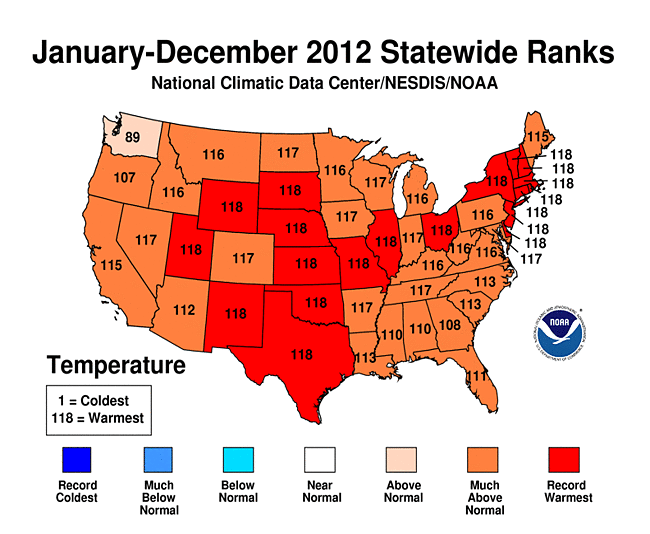
(Courtesy NOAA) The mid-continent truly burned in 2012.

In grassland continental climates, heat is associated with drought, and 2012 was true to form. Last year was among the driest ever for much of the middle of the country. In 2011, flooding plagued the Midwest. By the end of 2012, the mighty Mississippi was reduced to mud, sand bars, and a trickle. At least the reduction of exports on barge traffic is associated with a decrease in the export of sediment and nutrients.
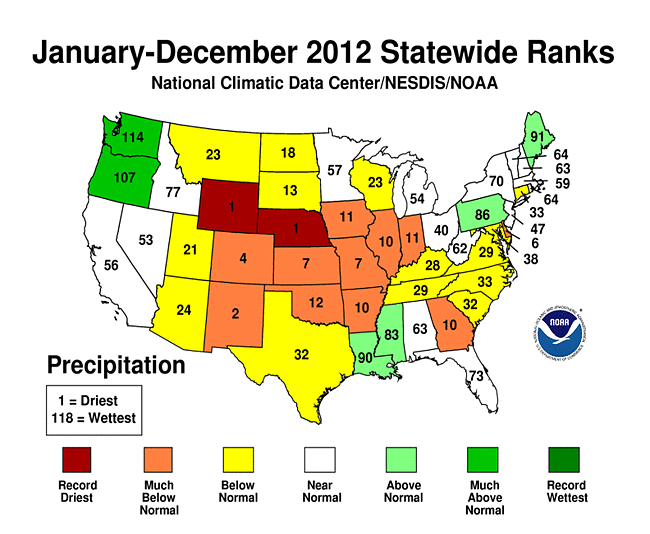
(Courtesy NOAA) This year was exceptionally dry for the Central U.S. It should also be noted that the southern species have seen relatively dry conditions now for three consecutive years. In contrast, much of Nebraska, was wetter than average last year.

In 2012, 9.2 million acres burned in wildfires. Some of these fires consumed areas beyond my comprehension.

The Long Draw fire in the sage-steppe grassland southeastern Oregon burned over 550k acres. The scale of the burn scar rivals or surpasses those of the mighty fault block Steens Mountain and Alvord Deserts just to the northwest (green and white respectively).

The shit truly hit the fan in 2012, and although much of it was unprecedented in our records, it was not beyond the capabilities of our natural systems for recovery. The problem that I see as a conservationist and restorationist is that there will be a day in our children’s lifetimes and in some of our lifetimes that this will be the norm. It will be the norm if we take action on climate now. If we don’t take action now, years like this year will be a cakewalk.

We can view a prairie after a drought or forest or sage-steppe grassland after a severe fire and comfort ourselves in the resilience of these systems, but resilience assumes that there is a window of conditions for recovery. In eighty years the recovery window, which is yesterday’s normal, will be an anomaly…as anomalous as 2012 with respect to the current climate record. If we don’t drag our feet, we have a lot of hope for saving species. If we’re really smart and lucky, we’ll be able to save the physical structures and functions of natural systems. I don’t think we can possibly learn what we ought to do fast enough. All we can do is improve our odds.
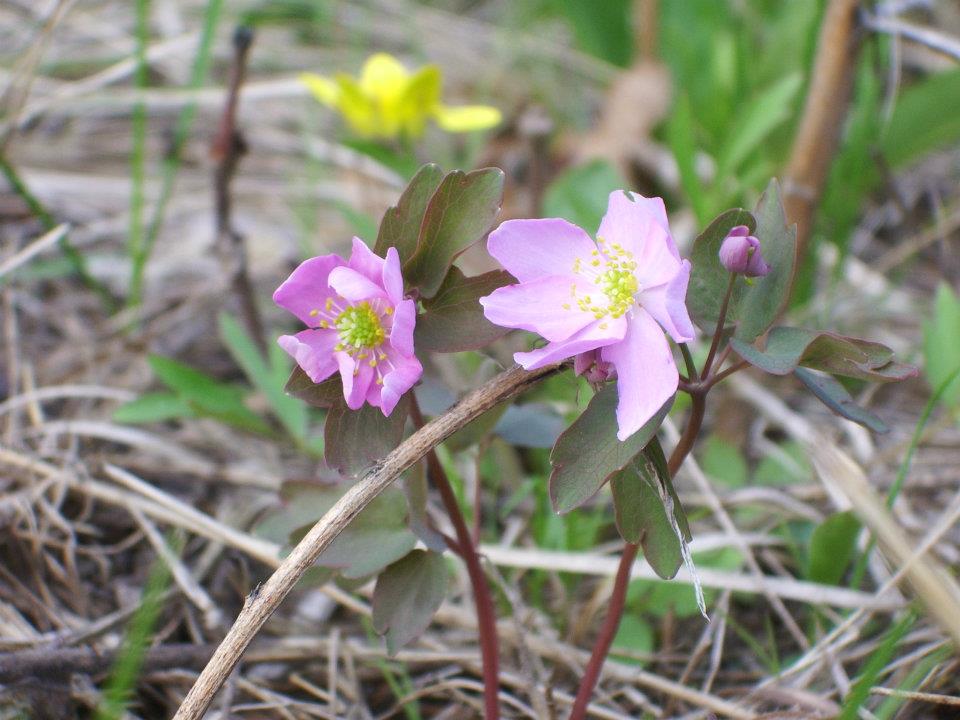
Will anyone born in 2012 share this flower with their children?

Will anyone born in 2012 share this flower with their children?

Posted in Uncategorized | Leave a comment

Oregon Sage-Steppe

I’ve finally settled into the sage-steppe grasslands of Eastern Oregon. In many ways, my new home is a world apart from the tallgrass prairies of the Midwest, having few ticks, no chiggers, no poison ivy, and no thorny or prickly vegetation above shin height. It essentially doesn’t rain in the summer. There are NO C4 grasses (frankly, good riddance to them). If the system is healthy, it doesn’t burn very often (and vice versa). There are landscapes on the sage-steppe. People call the Flint Hills of Kansas a “landscape-scale” prairie. From a Great Basin perspective, the Flint Hills prairies are like the postage stamp prairies of Iowa and Illinois. Elk and Antelope roam here. A nighttime drive reveals no lit bulbs for miles or tens of miles to the horizon.

View from the Northern Great Basin Experimental Range. Juniper encroachment is evident.

View from the Northern Great Basin Experimental Range. Juniper encroachment is evident.

That said, there are many commonalities. In both places, altered fire regimes threaten biodiversity, although in sage-steppe grasslands it is mostly fire too often, whereas in tallgrass prairie both too frequent and too infrequent fire can starkly achieve biodiversity loss. Both grasslands are threatened by the encroachment of Juniper species. Both face threats from exotic species, especially in temporal or spatial proximity to human activity. Both inspire wonder. Both are worthy of conservation and restoration. Efforts for conservation and restoration in both are often justified and underwritten over concerns for particular, charismatic grouses.

On the sage-steppe the barriers to successful restoration are initially abiotic, although they develop a biotic component if exotic, annual grasses are given time to dominate after disturbance. Dry periods and fine soils lead to the formation of crusts that germinated seedlings often fail to emerge through. Soils after fires are often hydrophopic, preventing moisture from penetrating and sustaining young vegetation. Seeds often germinate in fall and die over the winter before they can emerge. Summer brings drought. Generally, abiotic conditions favorable for the establishment of plants from seeds are unpredictable…a year’s efforts may be a waste or they may not. A fifty-million dollar effort (i.e. BLM recovery plans following large fires in 2012) to revegetate a huge tract devastated by an unusually large and intense series of wildfires may succeed, or it may fail utterly.

Seeds with a hydrophopic coating to prevent early germination. Seeds were sown in rows and covered to approximate rangeland drilling.

Seeds with a hydrophopic coating to prevent early germination. Seeds were sown in rows and covered to approximate rangeland drilling.

Bluebunch wheatgrass is among the dominant bunchgrasses in sage-steppe grasslands. Re-establishing it following catestrophic fires and other disturbances may be key for preventing invasion by exotic annual grasses.

Bluebunch wheatgrass is among the dominant bunchgrasses in sage-steppe grasslands. Re-establishing it following catestrophic fires and other disturbances may be key for preventing invasion by exotic annual grasses.

When I was searching for graduate programs, I was initially interested with the idea of restoration in arid systems. I was told quite bluntly by a well-known faculty at the University of New Mexico, that restoration in arid grasslands didn’t work.

Luckily, there are people with an imagination out there, who have been asking whether or not barriers to the restoration of arid grasslands are insurmountable. If we lump seeds together, so their collective turgor can break through soil crusts, if we coat seeds with surfactants to punch holes in hydrophobic soils, if we coat seeds with hydrophobic substances to delay their germination until spring, if we engineer “pillows” so broadcast seeds tend to fall seed-down with a cap of soil over them, can we make the results of restoration more predictable? Maybe.

A huge problem with restoration and the expectations surrounding it has always been that we are trying to recover characteristics of a system from a new starting point, over a different trajectory, and over a truncated time period compared to the context that led to the formation of the system in the first place. We are working with something with great and perhaps irreducible complexity, and our approaches have been very limited…prescribed disturbances, and, in a few cases, tinkering with spatial arrangements. This research is exciting to me, because these are new tools, and they are targeted tools. At the rate we are turning up and simplifying the world we live in, we have to both increase our efforts and our abilities in order to achieve noticeable progress.

Posted in restoration | Leave a comment

Drought

I am wrapping up my field work this month and next, and things are looking a lot different than they have any time in the last four years. The drought is epic. I’m not old, but I’ve never seen things drier. At my research site in Nebraska, which has been relatively wet until this year, things are especially bad.

I captured these images while I was in the field up in Nebraska a couple of days ago.

This is one of the quadrats I sampled from on my restoration plots just northest of Hastings, NE. The dry vegetation is mostly indiangrass (Sorghastrum nutans), wild rye (Elymus canadansis), and rigid goldenrod (Oligoneuron rigidum). If you look close, you can find a little bit of green indiangrass, and there are a couple of stems of the exotic grass, Bromus japonicus.

Zooming out a bit, you can see that the grass is almost completely fried. Most of the green plants are rigid goldenrod, but about half of these are brown along with half of the rosinweed (Silphium integrifolium). The tall stems are last year’s growth of Illinois bundleflower (Desmanthus illinoensis).

In some ways this drought my be fortuitous (beyond having many fewer green stems to count in August sampling). While it is not something I am manipulating, this drought and heat are the sort of events we expect to increase in frequency in the coming decades, so it will be interesting to see how the prairie responds. In this experiment, where I’ve sown identical communities into the plots, but manipulated the states they are sourced from, will there be consequences of source  for drought response? For example, I do know drought affects flowering phenology, and some species from some sources got flowering in ahead of the drought while others did not. I am also relieved I didn’t bother with passive rainout shelters to create fake drought this year, because there has been almost no rain to intercept.

Posted in native plants, restoration, Weather and Climate | Leave a comment