A Coarse-Level Metrics Assessment for Wisconsin Oak Woodlands

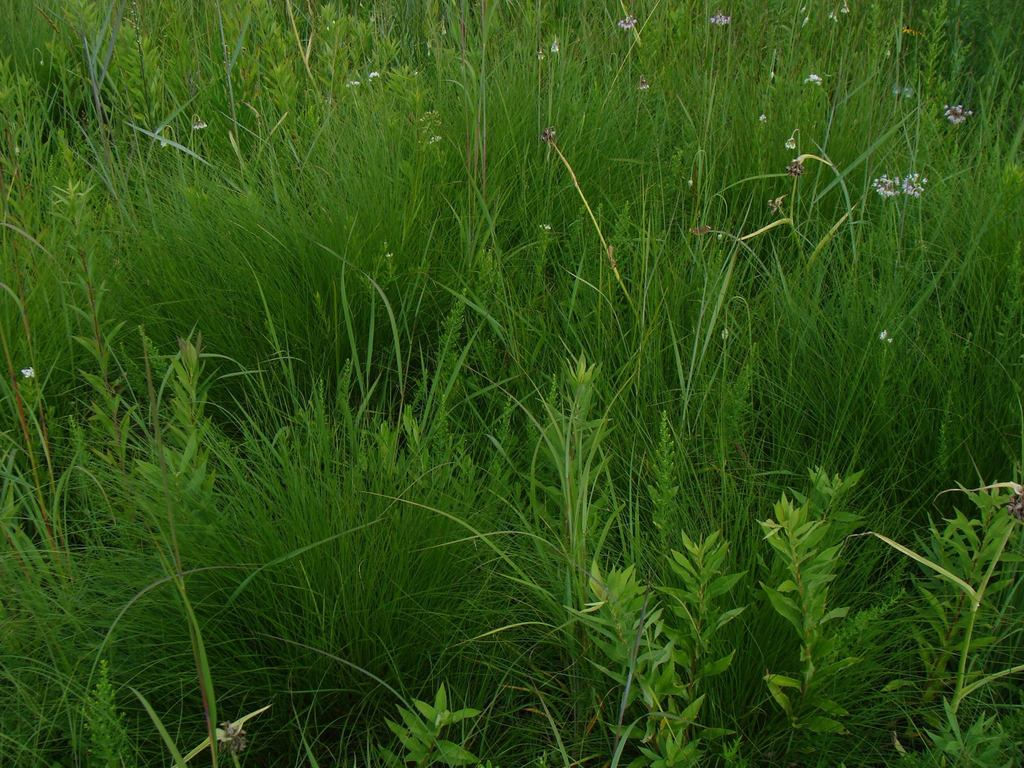
Remnant oak woodland that is certainly degraded, but still supports false toadflax, pale vetchling, broad-leaved panic grass, black-seeded rice grass, big-leaved aster, and alumroot among other species. Herbaceous vegetation has persisted here in the absence of fire, because of the convex, ridgetop position, which promotes scouring away of leaf litter by wind.

I was very privileged to work with dedicated colleagues to develop a coarse-level metrics assessment for Wisconsin oak woodlands recently. We also developed a similar assessment for oak openings (open savannas), but oak woodlands are, in my mind, special, because oak woodlands are often overlooked, misunderstood, and shoehorned into other community types. High quality oak woodlands with fully intact herbaceous sods are probably as rare or rarer than mesic prairie, but we don’t know, because we lack data! I hope this will be a valuable tool for prioritizing and establishing condition baselines and subsequently monitoring oak woodland sites. This assessment is rooted in ecological integrity and recognition that the intactness of the herbaceous vegetation is at least co-equal in importance to arboreal characteristics oak woodlands.

Yellow stargrass, wood betony, Robin’s plantain, common wood rush, sky-blue aster, savanna running sedge, common blue-eyed grass, Pennsylvania sedge, and low false bindweed in a bit of old growth oak woodland sod. Unfortunately the point where this photo was taken was graded and paved over to put in a boat launch at Army Lake, but a part of that very important site survived.

Old-growth examples of that herbaceous vegetation tend to be low in stature (even at mesic sites with fine-textured soils) and have abundant forbs that flower throughout the growing season. The best sites are where fence grazing had the least impact and the action of wind has continued to remove smothering leaf litter in the absence of fire–low knolls surround by water and/or open peatlands and wind-exposed slopes and ridgetops. The best restored examples are burned frequently in the dormant season.

Below are links to the latest versions of our field form and procedure documents.
Posted in biodiversity, Conservation, ecological integrity, ecological-assessment, Forests, native plants, Oak opening, Oak Woodland, oaks, restoration, Savanna, Stewardship, woodland | Tagged , , , , , , , , , , , , , , , | 4 Comments

A Few Things to Consider for Interpreting Deever et al. (2023) Study on Recruitment of Early- and Late-Flowering Forbs from Seed and Transplants

Link: Recruitment Limitation of Early- and Late-Flowering Grassland Forbs can be Overcome with Transplanting in Prairie Restorations

In this study, adding forbs, especially adding early forbs, and adding transplants vs. seeds improved results. Three things are worth considering:

  1. Seeds were sown and transplants were added in May. Generally, the forbs sown in this study would have the best chance of establishing if seeded in autumn or fresh (wood betony).
  2. This was land coming out of corn-soy row-cropping on mollisol soils. It’s unlikely that silky aster (Symphyotrichum sericeum) and Pasqueflower (Pulsatilla patens), both species of dry, often rocky/gravelly prairies, were appropriate for the site. Forb treatments ranged from the addition of 1 to 6 species, so species choice was pretty important.
  3. Wood betony (Pedicularis canadensis) was an excellent choice, but using it is complicated by its hemi-parasitism and likely benefit of growing transplants with a host vs. not and the likelihood of seeded plants finding suitable hosts when sown onto bare ground at the outset of reconstruction of prairie on agricultural land vs. into a situation with established perennial hosts and minimal thatch.

I think seeding may have been relatively more successful with different timing and perhaps a different choice for a couple of the forbs. Certainly, seeding early species can be extremely successful. I’ve seen repeated instances of it, but good results require that the right species be included in sufficient amounts and that methods are chosen that recognize the ecologies/natural histories of the component species.

Here, smooth blue aster (Symphyotrichum laeve) or sky-blue aster (Symphyotrichum oolentangiense) would have been more appropriate asters than silky aster, and prairie violet (Viola pedatifida), yellow stargrass (Hypoxis hirsuta), or prairie blue-eyed grass (Sisyrinchium campestre) would have been more appropriate choices than Pasqueflower for mesic sites in northern IA / southern MN.

That said, many prairie plantings are sown in May, and often the many species in mixes aren’t the best for a particular site or their proportions reflect costs, especially with Farm Bill plantings. Most Farm Bill plantings could be much better …another topic.

Here I commend the recognition that “early” species are important to include in prairie reconstruction. Also worth looking into are the actual co-dominant grasses of the upland mesic tallgrass prairie —porcupine grass (Hesperostipa spartea), prairie dropseed (Sporobolus heterolepis), and Leiberg’s panic-grass (Dichanthelium leibergii).

Posted in biodiversity, Conservation, CRP, native plants, Prairie, restoration | Tagged , | Leave a comment

New Study Shows Increased Prairie Reconstruction Success with Increased Management Intensity (More Fire).

This study is unique, because it actually used mean coefficient of conservatism as a response variable, which is a much better variable to assess outcomes with, because conservative species are those associated with old growth, richness can be, but richness can also increase during early stages of degradation.

Anyway, this links to the article, McFarlane et al. (2023).

I have one quibble. The article cites Collins (2000) for historical fire frequency (3-5 years). That is not an appropriate citation, because historical fire frequency was not the topic studied in the paper. I knew that the moment I saw it, because of my history with Konza. Collins (2000) cites a fire frequency “hypothesized” in Wright and Bailey’s book Fire Ecology (1982). Citation practices like are unintentionally misleading, because the uncertainty and context drop away.

The right thing to do is go to the source and evaluate critically if it is the best information available. Otherwise, it would be no different if someone next year cited McFarlane et al. for the 3-5 year return interval, and on and on and on. I think it’s something all of us that have written an academic paper, term paper, Dissertation, or Thesis have done. But we need to do better, and editors and reviewers need to do better. There is also some bias to cite newer work, which isn’t necessarily better just because it is more recent, and certainly if it was testing the hypothesis that the citation implies.

There certainly is a boatload of information from historical accounts that fire was more frequent than that, and I would argue that the poor persistence of prairie biota due to degradation of sites burned at that frequency is also strong evidence that it is wrong. Fire scar data from oaks on prairie-oak mosaic landscapes falls in the 3-5 year ballpark, but those are fires of high enough intensity to scar oaks–even on the in the more sheltered locations (leeward from streams/rivers, north and east aspects) where they tended to be more prevalent. Very frequent fire usually means less fuel and lower intensity.

Still, this is important research that says what many of us have already learned–we must have continued interaction with planted prairies. We need to treat them like prairie if that’s what we want them to be, and that means burning a lot and ensuring that propagules can get there. I say this all the time now, but it is the low/no thatch condition maintained by frequent (or annual) fire that gives the species that arrive the chance to assemble into a diverse and interwoven prairie community, AND it is what allows that to persist once formed. And this is particularly true when fire occurs between autumn and very early spring.

A relatively conservative prairie with abundant prairie dropseed (C-value = 10 in WI). This is true prairie.

Posted in Uncategorized | Leave a comment