
Stability Part One: Why I Recommend Frequent Dormant Season Burning
Prairie and Oak Ecosystems Depend on Stability
A central organizing concept of my ecological education was that prairie and oak ecosystems are “disturbance dependent.” This view emphasizes that we stop these ecosystems from becoming something else and deemphasizes that they are something in and of themselves—old growth. Disturbance-centric thinking remains prominent in prairie and oak ecosystem science and management. For example, under the heading “Managing Prairies” the MDNR website[1]states:
“Prairie is a ‘disturbance-driven’ ecosystem: plants and animals have adapted to withstand and even thrive with regular disturbance—fire, grazing, and periodic droughts. Each disturbance favors different plants and animals, so it is important to include a variety of disturbance types, timing, and frequency.”
The advice to mix things up sounds reasonable, disturbances do favor different plants and animals, and certain events or conditions must occur to prevent oak and prairie ecosystems from becoming something else.
The problem is that disturbance[2] can simplify ecosystems and promote species that are not conservation priorities at the expense of the old growth that we would like to conserve or emulate. Given what we know about historical structure, composition, and the individual ecologies of the species that comprise old-growth prairie and oak ecosystems, I believe that the prevailing view about how these ecosystems sustain themselves—disturbance—is wrong. Instead, stability should be a central organizing idea guiding our stewardship.
Centering management around a core principle of stability does not mean doing less. Indigenous Peoples’ use of fire and its interaction with landscape, climate, and biota was the lattice over which our prairie and oak ecosystems came together over thousands of years. Managing for stability means keeping this in mind and building an understanding of how it governs ecological processes. In this article I will discuss prescribed fire, and how it can function as a stabilizer or a destructive disturbance depending on how we use it. I intend to discuss other management practices in turn.
Frequent Dormant Season Fire is Stabilizing; Infrequent, Intense, and Growing Season Fire is Destabilizing
First, recognize that critical areas of fire ecology in Midwestern prairie and oak ecosystems are forgotten, understudied, or not studied through the posing of questions and collection of data that informs conservation versus agronomic or productivist ends. Synthesis of what we do know is also in short supply. What follows is my earnest attempt using applicable science, cases of success and failure, and historical information to explain why I advocate for very frequent[3] dormant season (in WI that is often mid-October through March, rarely very early April) burning. This topic is also difficult to flatten into a linear narrative, such are the ecological relationships. Many threads could be drawn from this that merit their own separate discussions.
Let’s not refer to fire as a tool. A Pulaski is a tool. Fire is an integral part of Upper Midwestern prairie and oak ecosystems. Fire is their primary stabilizing agent and was probably the greatest single consumer of their plant production in the past (Wendt et al. 2023[4]). The more frequently contemporary Midwestern prairie and oak ecosystems burn in the dormant season, the more they retain historical or old-growth composition over time (Towne and Owensby 1984[5], seasonality of fire; Milbauer and Leach 2007[6], Bowles and Jones 2013[7], and Alstad et al. 2016[8], frequency of burns mostly in early spring or fall). See my article in the Prairie Promoter[9] for a discussion specifically about how fire exclusion and altered fire seasonality have affected prairie grass species composition. With enough dormant season fire and other appropriate management, incredibly diverse and complex examples of prairie and oak ecosystems have recovered and persist. Black Earth-Rettenmund Prairie and Sugar River Savanna are excellent examples. Unfortunately, few places are managed this way. We need more demonstrative examples for science and inspiration[10]. Sites burned too infrequently lose old-growth-associated composition and structure—conservative[11] plant species and the fauna they support, so do sites that receive too many growing season fires. Hopefully, what follows provides synthesis and insight into how lack of fire and growing season fire can be destabilizing.
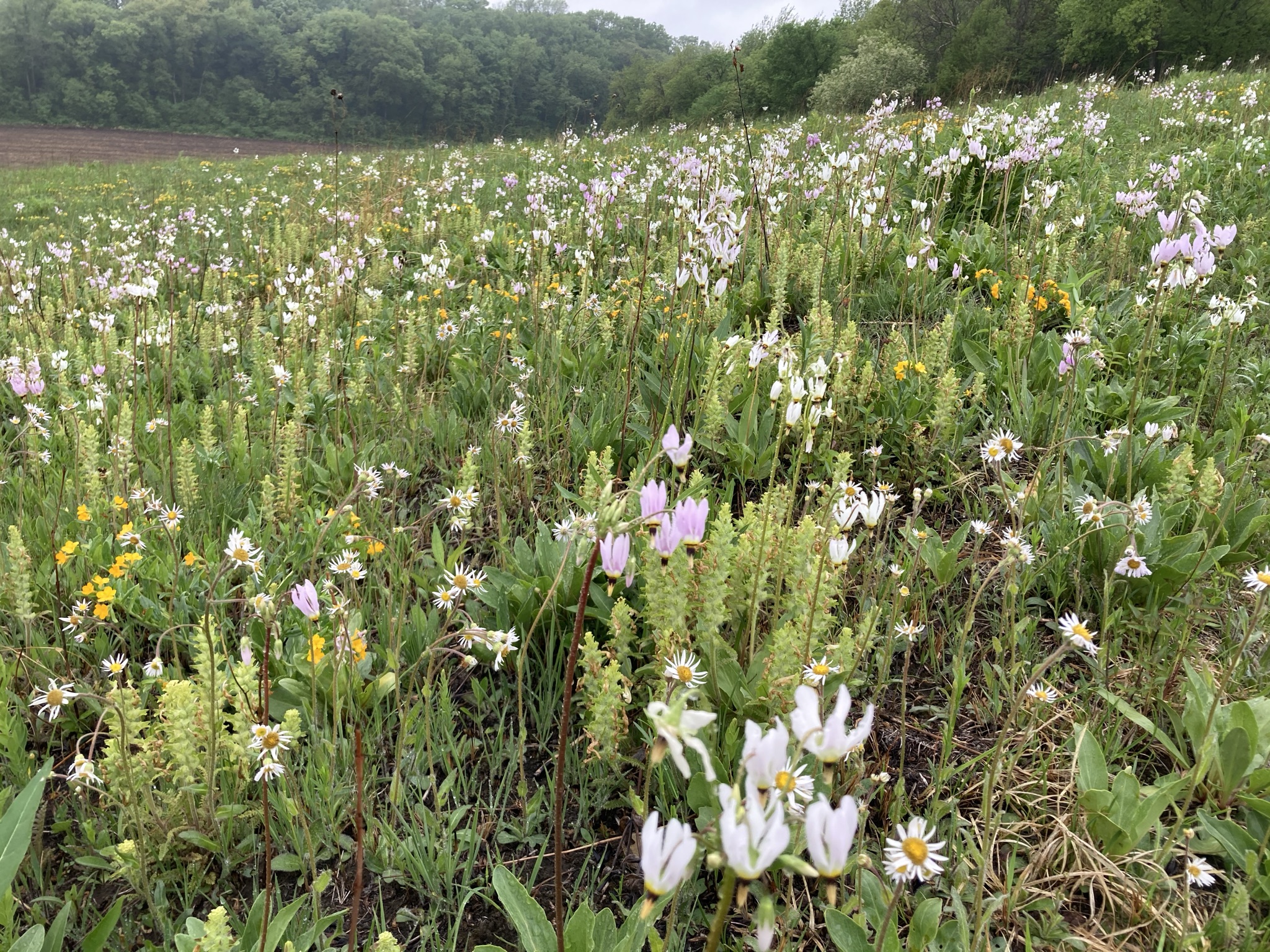

Most historical accounts describe ignitions preceding (and during) the genocide of Indigenous Peoples by U.S. and Canadian governments as anthropogenic, autumnal[12], and frequent over large areas (Stewart 2002[13]; Wilhelm and Rericha 2007[14], 2012[15]; McLain et al. 2021[16]). Wilhelm and Rericha refer to this as the “ancient, culturally mediated rhythm,” and it prevented smothering thatch and litter accumulation, reduced fire intensity (especially duration), and minimized growing season nutrient availability. Fire in the dormant season is not unlike frost to prairie or oak ecosystems, something that in its proper season falls within the parameters that governed their original formation and subsequent evolution. Fidelity to that seasonal rhythm is not anachronistic; it is important for the restoration and maintenance of prairie and oak ecosystems. It has served us well as the climate has changed dramatically over the last several decades, and it will probably continue to do so if we allow it. Grasslands, savannas, and woodlands with many structural and compositional similarities once existed from near the Gulf Coast to north to Minnesota and east to the Atlantic—over tremendous gradients of temperature, precipitation amount, and precipitation seasonality because of Indigenous burning.
There is disagreement between historical accounts and scientific estimates of fire frequency based on fire scars (e.g., Allen et al. 2011[17]), which typically estimate fire-return intervals of several years to a decade. The fire regimes that best-maintain prairie and oak ecosystems on the contemporary landscape lend strong support to the historical accounts; very frequent dormant season fire maintains prairie and oak ecosystem composition and structure. Fire scar studies capture fire events sufficiently intense to scar oaks on landscape positions where trees historically occurred—not prairies. Very frequent or annual fires in oak woodlands have low intensity due to reduced fuel loads and may fail to scar oak trees and subsequently be detected in the fire scar record (McEwan et al. 2006[18], Knapp et al. 2017[19]). Climate change and other anthropogenic changes at scales ranging from local to global may also necessitate that we burn differently, regardless of historical frequency. We should strive to do what works, regardless which estimates of historical frequency are right. If anything, we should burn more exclusively in the dormant season and more frequently.
The benign removal of litter and thatch that would otherwise smother and weaken the sod of native graminoids and forbs typical of prairie and oak ecosystems is among the most important stabilizing roles of fire. When prairie fire is too infrequent, thatch accumulation thins the herbaceous vegetation and “prairie understory” species fade while composition shifts in favor of taller species and those with longer-elongating rhizomes that can grow up through the debris (e.g., Weaver 1952[20]). A similar phenomenon occurs in remnant oak woodlands, which support continuous grassy / sedgy, often forb-rich herbaceous vegetation. Without removal of oak leaf litter by fire or another agent like wind (as on convex topography and windswept slopes), many woodland herbaceous species are smothered. Midland shooting star (Primula meadia) is an example from both prairies and woodlands that is diminished in this way. When searching for remnant woodland vegetation at long fire-starved sites, I’ve learned to seek topography that is subject to removal of fallen leaf litter by wind. Perhaps because this is such a plain mechanism, direct smothering effects of leaf litter are under-researched in woodland ecosystems (but see Sydes and Grime 1981[21], Vander Yacht et al. 2020[22]). Once the herbaceous sod in a prairie, savanna, or woodland is thinned and degraded, it becomes more vulnerable to invasion and woody encroachment.
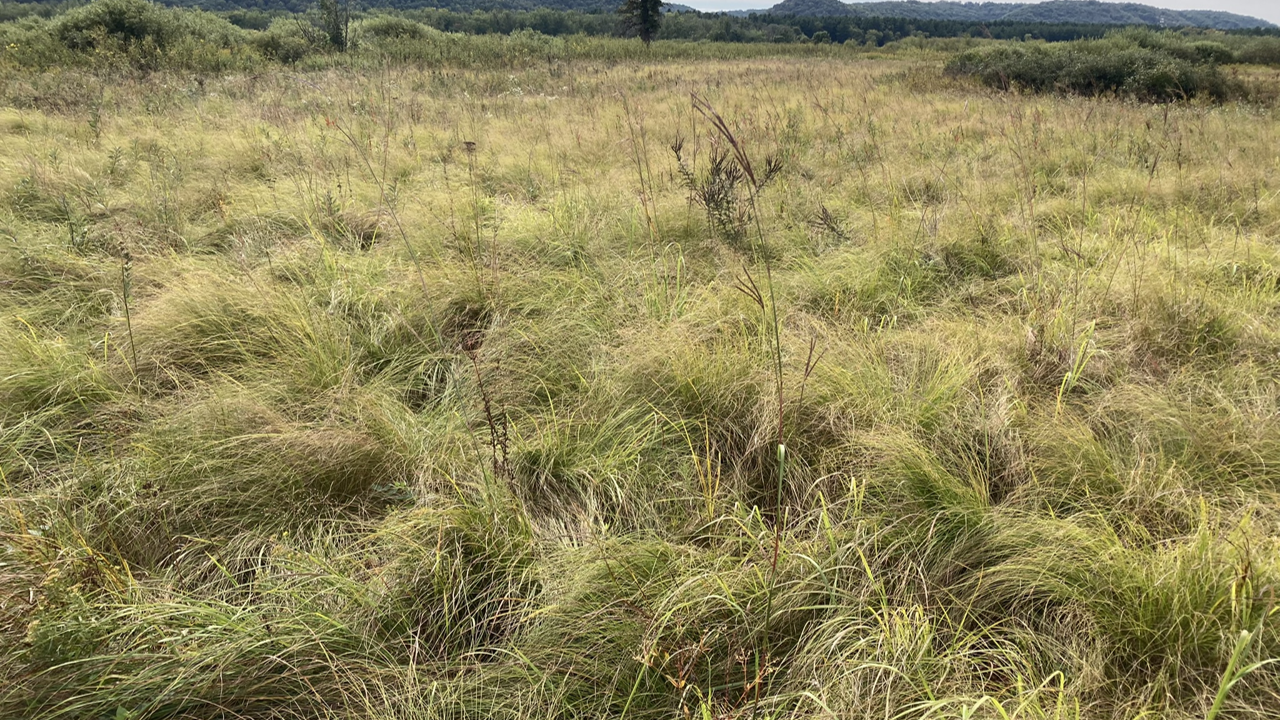
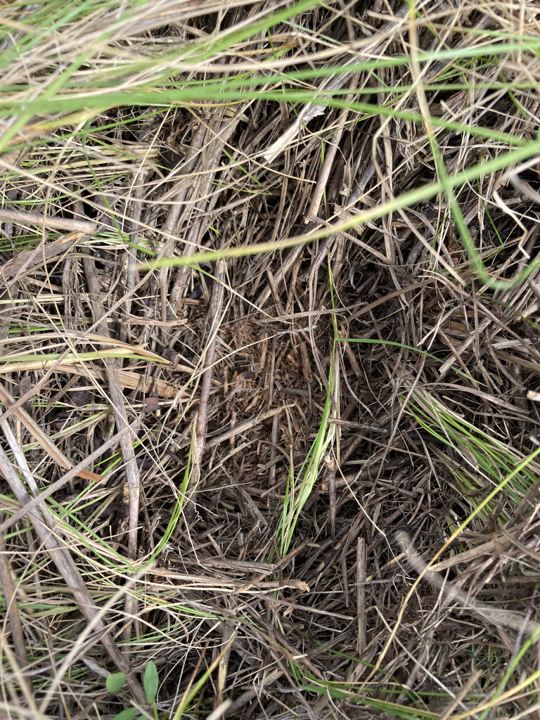
Thatch and leaf litter don’t only smother. Increased fuel loads lead to greater fire intensity as fire burns down through accumulated debris. This can injure herbaceous species whose regenerating buds are held at or above the soil surface, species like little bluestem (Schizachyrium scoparium) and prairie dropseed (Sporobolus heterolepis) and cause greater harm to certain invertebrates overwintering at or just below the soil surface (e.g., Dana 1991[23]). Intense fire can injure mature, healthy oak trees and lead to abrupt changes in canopy closure. In relatively nutrient poor oak and pine ecosystems, long periods without fire can lead to duff development (an organic layer below the leaf litter), and when trees proliferate roots in the duff, fire can subsequently consume those roots with lethal results (Carpenter et al. 2021[24]).
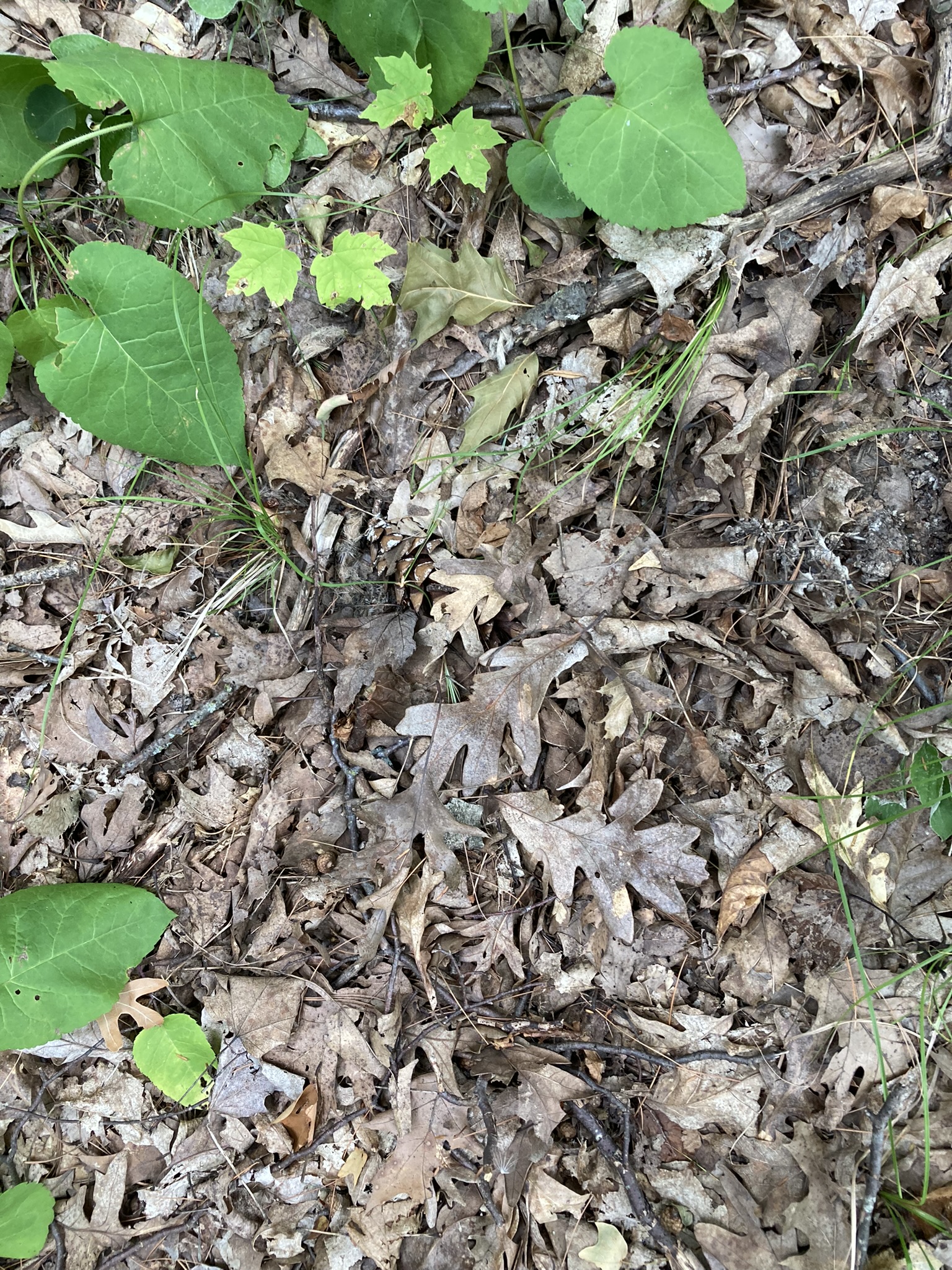
Frequent prairie fires can reduce nitrogen availability (e.g., Ojima et al. 1993[25]) through volitilization, and the same may be true in woodlands where fire is frequent and consumes primarily fine fuels. Frequent fire may also contribute higher carbon to nitrogen ratios in oak litter, which can lead to more immobilization of nitrogen and reduce nitrogen availability (Hernández and Hobbie 2008[26]), but it does not necessarily lead to nutrient losses from the ecosystem (Sharenbroch 2010[27]). Conversely, adding nitrogen destabilizes prairie composition (Koerner et al. 2016[28]). Old-growth vegetation in fire-dependent ecosystems is comprised largely of species that rely on year-to-year survival versus annual reproductive output or seed banks for population persistence. Old-growth vegetation also tends to be nutrient efficient and produce slower-decomposing, flammable litter. Dormant season fire sustains that vegetation by removing accumulated detritus without significant injury to established herbaceous plants. Conversely, the strategy of most weedy species is to persist in the seed bank or disperse widely and respond to available nutrients and light by growing and reproducing rapidly. The litter they produce tends to be less flammable and decompose rapidly, which promotes faster nutrient cycling and greater nutrient availability. Growing season fires cook the aboveground living tissues of conservative herbaceous plants. In addition to that direct harm, which can be substantial and lead to compositional changes related to plant growth form and regeneration strategy, it results in the hard-won nutrients present in their tissues and light intercepted by their foliage being made available. This creates an environment where soil warmth, light, and nutrient cues align to encourage the establishment of opportunistic, weedy species. Nitrogen (nitrate), for example, serves as a germination cue for raspberries (e.g., Jobidon 1993[29]) and a variety of herbaceous weeds, particularly in combination with light (Soltani et al. 2022[30]). Heat from fire also has more opportunity to penetrate the soil during the growing season, because the latent heat of water buffers soil temperature, and near-surface soil moisture content usually decreases as the growing season proceeds. Exposure heat can break seed dormancy in smooth sumac (Li et al. 1999[31]), which I think is worth considering! Where late spring or summer burning has occurred and sumac is on the landscape, look for sumac seedlings. Setting the flora aside, greater direct negative impacts of growing season burning on certain fauna are well known (e.g., Harris et al. 2020[32]); these magnify tensions between the use of prescribed fire and rare animal species. Dormant season burning minimizes them.

Conservation-oriented land managers often burn during the growing season in order maximize injury to unwanted woody vegetation. The evidence that this makes a meaningful difference is scant. Meunier et al. (2021)[33] showed decreases in re-sprouts per individual (not mortality) for northern pin oak (Quercus ellipsoidalis) and bush honeysuckle (Lonicera spp.) with August burning relative to April or June burning, but they found no similar benefit for common buckthorn. Hartnett and Wilson (2011)[34] found that spring and summer growing season burns led to increases in smooth sumac relative to fall and winter burns.
Another argument for burning during the growing season is that it can be associated with increased herbaceous plant richness and primary productivity[35]. These may be go-to response variables for research ecologists and agronomists, but they tell us little about ecological integrity[36] and can indicate ecosystem degradation. As fire-dependent ecosystems degrade their richness is a function of extirpation of the species that were originally present and colonization by opportunistic species or those associated with other ecosystem types7,8. For example, widely dispersed woodland species like stickseed (Hackelia virginiana) can accompany woody encroachment into the prairie. Inventories of degrading sites are often packed with such species—even while the original species are hanging on by a thread. Likewise, primary productivity can increase with ecosystem degradation—even when an ecosystem undergoes profound change that impairs other ecosystem functions and resilience (De Leo and Levin 1997)[37]. Imagine a sedge meadow that transitions to Phragmites dominance. Productivity is used as a measure of ecosystem efficiency, but the sun’s energy does not just go into biomass production; it also fuels production secondary metabolites, which are the basis for countless specialized interactions between plants, fungi, bacteria, and both invertebrate and vertebrate fauna! High quality prairie and oak ecosystem herbaceous sods are often low in stature, but that does not mean that they are thermodynamically inefficient. They are just doing different things! Increased productivity aboveground may be indicative of nutrient availability destabilizing composition by causing a shift from belowground competition to aboveground competition for light (e.g., Wilson and Tilman 1993[38]; Goldberg et al. 2017[39]), which favors species with opportunistic strategies.
Frequent dormant season burning can keep most woody encroachment at bay when the sod is strong, and frequent dormant season burning results in a strong sod. When they occur together, dormant season fire and high integrity herbaceous sods are stable and autocatalytic. For example, quaking aspen (Populus tremuloides) has remained a minor presence at Sugar River Savanna for fifty years with near-annual dormant (very early spring) burning[40]. Aspen would most likely overwhelm a similar site in the absence of frequent fire, but the herbaceous sod there is tightly interwoven. The same is true for sumac in more degraded Flint Hills prairie in Kansas33. Upon cessation of frequent fire, species like aspen, smooth sumac, and gray dogwood (Cornus racemosa) quickly take over, if they have a toehold, and the ecosystem changes states. This isn’t because fire is ineffective. It’s because very frequent dormant season fire is a defining part of the autocatalytic system that has been interrupted and remains underutilized.
Frequent dormant season burns stabilize prairie and oak ecosystem composition, structure, and ecological processes by removing smothering debris and minimizing growing season nutrient availability without injury to conservative, old growth vegetation. Are there situations where less frequent fires, or disturbance-inducing intense or growing season fires are appropriate? I can think of examples related to specific management needs or goals. Many are applicable to degraded sites where conservation of one or a few species or the need to generate income outweigh other considerations in the short term. Those instances have merit, but such decisions should be based on an understanding of the relevant ecological processes and both direct and indirect effects. Historically, disturbance fires did occur. Some fire scars were laid down during the growing season. Lightning can ignite summer fires in drought years. Those fires may have had important effects on ecosystem structure, composition, and processes in the past, but the fire-dependent ecosystems of the past were also buffered by intact ecological landscapes free of invasive species. Remaining prairie and oak ecosystems can no longer rely on landscape ecological processes for resilience. This should give us pause when we consider deviating from the “ancient, culturally mediated rhythm” to mix things up, hit woody vegetation hard, or simply get more fire on the ground.
[1] Minnesota Department of Natural Resources Website (accessed 1/12/24): https://www.dnr.state.mn.us/prairie/manage/managing-prairie.html
[2] For the sake of this discussion, disturbance is an event that causes mortality, injury or stress to an ecosystem or one of its components that causes deviation from a reference state.
[3] How frequent is frequent? It depends on the ecosystem type. Relatively productive mesic prairies may need to be burned more often than every other year maintain structure, composition, and ecological processes. Some dry, sandy sites require multiple seasons to build up enough fuel to burn.
[4] Wendt, J., et al. (2023) Past and present biomass consumption by herbivores and fire across productivity gradients in North America. Environmental Research Letters 18.12: 124038.
[5] Towne, G., & Owensby, C. (1984). Long-term effects of annual burning at different dates in ungrazed Kansas tallgrass prairie. Rangeland Ecology & Management, 37(5), 392-397.
[6] Milbauer, M. L., & Leach, M. K. (2007). Influence of species pool, fire history, and woody canopy on plant species density and composition in tallgrass prairie1. The Journal of the Torrey Botanical Society, 134(1), 53-62.
[7] Bowles, M.L., & Jones, M.D. (2013). Repeated burning of eastern tallgrass prairie increases richness and diversity, stabilizing late successional vegetation. Ecological Applications, 23(2), 464-478.
[8] Alstad, A.O. et al. (2016). The pace of plant community change is accelerating in remnant prairies. Science Advances, 2(2), e1500975.
[9] Carter, D. (2023). Change and persistence among prairie grasses. Prairie Promoter, Summer, 10-12.
[10] Very few sites in most research cited are burned very frequently, for example in Milbauer and Leach (2007), burn frequency was divided into three classes, the most frequent class including sites that had been burned between four and seventeen times in twenty years. We need more sites that are burned more often than every other year, including annually for greater resolution of fire’s effects.
[11] Conservative plant species are those that are relatively intolerant of degradation. Species are assigned coefficients ranging from zero to ten; those with higher coefficients are more indicative of a relatively stable and undisturbed conditions where they occur. The three most frequent grasses on WI mesic prairie, for example, all have coefficients of nine or ten. About 80 percent of Wisconsin’s native flora have C-values of four or greater.
[12] A bias based on more travel in fall or early winter versus when conditions were muddy in early spring has been raised, but if that were the case, fires were overwhelmingly at the edge of or within the dormant season, and there is as of present no evidence beyond conjecture to suggest early spring fires were as or more common or extensive than autumnal fires. We need more science to elucidate ecological differences, but practically it may be advantageous to utilize fall burning opportunities to guard against the possibility of rapid spring green-up, as happened in 2023.
[13] Stewart, O.C. (2002). Forgotten fires: Native Americans and the transient wilderness. University of Oklahoma Press.
[14] Wilhelm, G., & Rericha, L. (2007). Timberhill savanna assessment of landscape management. Conservation Research Institute, Elmhurst, IL.
[15] Wilhelm, G. & Rericha, L. (2012). Inventory and Assessment Plan for Stewardship and Monitoring at Hitchcock Nature Center. Conservation Research Institute, Elmhurst, IL.
[16] McClain, W. et al. (2021). Patterns of anthropogenic fire within the midwestern tallgrass prairie 1673–1905: Evidence from written accounts. Natural Areas Journal, 41(4), 283-300.
[17] Allen, M. S., & Palmer, M. W. (2011). Fire history of a prairie/forest boundary: more than 250 years of frequent fire in a North American tallgrass prairie. Journal of Vegetation Science, 22(3), 436-444.
[18] McEwan, R. W., et al. (2007). An experimental evaluation of fire history reconstruction using dendrochronology in white oak (Quercus alba). Canadian Journal of Forest Research 37(4), 806-816.
[19] Knapp, B. O., Marschall, J. M., & Stambaugh, M. C. (2017). Effects of long-term prescribed burning on timber value in hardwood forests of the Missouri Ozarks. In Proceedings of the 20th Central Hardwood Forest Conference (pp. 304-313). USDA Forest Service Gen. Tech. Rep. GTR-NRS-P-167, Northern Research Station, Newtown Square, PA.
[20] Weaver, J. & Rowland, N. (1952). Effects of excessive natural mulch on development, yield, and structure of native grassland. Botanical Gazette 114: 1-19.
[21] Sydes, C., & Grime, J.P. (1981). Effects of tree leaf litter on herbaceous vegetation in deciduous woodland: I. Field investigations. The journal of ecology, 237-248.
[22] Vander Yacht, A.L. et al. (2020). Litter to glitter: promoting herbaceous groundcover and diversity in mid-southern USA oak forests using canopy disturbance and fire. Fire Ecology, 16(1), 1-19.
[23] Dana R., (1991) Conservation management of the prairie skippers Hesperia dacotae and Hesperia ottoe. Minnesota Agricultural Experiment Station Bulletin 594, University of Minnesota
[24] Carpenter, D.O. et al. (2021). Benefit or liability? The ectomycorrhizal association may undermine tree adaptations to fire after long-term fire exclusion. Ecosystems, 24, 1059-1074.
[25] Ojima, D.S. et al. (1994). Long-term and short-term effects of fire on nitrogen cycling in tallgrass prairie. Biogeochemistry 24:67–84.
[26] Hernández, D.L., & Hobbie, S.E. (2008). Effects of fire frequency on oak litter decomposition and nitrogen dynamics. Oecologia, 158: 535-543.
[27] Sharenbroch, B.C. (2010). Ecological impacts of long-term, low intensity prescribed fire in Midwestern oak forest. Report to: The Illinois Department of Natural Resources: 1-102.
[28] Koerner, S.E. et al. (2016). Nutrient additions cause divergence of tallgrass prairie plant communities resulting in loss of ecosystem stability. Journal of Ecology, 104(5), 1478-1487.
[29] Jobidon, R. (1993). Nitrate fertilization stimulates emergence of red raspberry (Rubus idaeus L.) under forest canopy. Fertilizer research, 36, 91-94.
[30] Soltani, E. et al. (2022). An overview of environmental cues that affect germination of nondormant seeds. Seeds, 1(2), 146-151.
[31] Li, X. et al. (1999). Anatomy of two mechanisms of breaking physical dormancy by experimental treatments in seeds of two North American Rhus species (Anacardiaceae). American Journal of Botany, 86(11), 1505-1511.
[32] Harris, K.A., et al. (2020). Direct and indirect effects of fire on eastern box turtles. The Journal of Wildlife Management, 84(7), 1384-1395.
[33] Meunier, J., et al. (2021). Effects of fire seasonality and intensity on resprouting woody plants in prairie‐forest communities. Restoration Ecology, 29(8), e13451.
[34] Hajny, K.M., et al. (2011). Rhus glabra response to season and intensity of fire in tallgrass prairie. International Journal of Wildland Fire, 20(5), 709-720.
[35] The biomass produced by primary producers (e.g., plants).
[36] An ecosystem with ecological integrity is comprised of the full range of parts and processes expected for a region and has its evolutionary legacy intact.
[37] De Leo, G.A., & Levin, S. (1997). The multifaceted aspects of ecosystem integrity. Conservation ecology, 1(1).
[38] Wilson, S.D., & Tilman, D. (1993). Plant competition and resource availability in response to disturbance and fertilization. Ecology, 74(2), 599-611.
[39] Goldberg, D.E., et al. (2017). Plant size and competitive dynamics along nutrient gradients. The American Naturalist, 190(2), 229-243.
[40] Henderson, R. (2022). Effect of long-term annual fire on tree establishment and growth in an oak savanna (Poster). The Prairie Enthusiasts Annual Conference: Inspired by Resilience.



 Prairie Botanist
You must be logged in to post a comment.